A water heater element wrench provides the leverage needed to remove or install heating components in an RV. These tools vary by length, the inclusion of a lever, and their compatibility with different bolt sizes.
Best overall: Anode Rod Element Wrench is a heavy-duty, 10-inch tool that offers extra torque for stubborn parts, making it a reliable choice for most RV and residential water heater maintenance tasks.
Best with pry bar: Upgraded Element Wrench includes an integrated pry bar for added leverage, which is helpful when you need extra force to loosen tight or corroded heating elements during your routine service.
Best compact design: Camco Residential Element Wrench is a 5-inch tool that excels in tight spaces where larger wrenches can’t fit, providing a simple way to manage screw-in elements using a standard screwdriver.
The rest of this guide is for DIY owners who want to perform their own water heater maintenance without needing a professional.
How We Picked
We compared 48 different Amazon listings to find the most capable tools for RV water heater maintenance. To earn a place here, each product had to clearly state its dimensions, material composition, and the specific bolt sizes it supports. We prioritized tools that offer clear leverage solutions, such as integrated pry bars or long handles, and excluded items with unclear compatibility or vague descriptions. Our selection focuses on the practical needs of RV owners, ensuring each tool provides a reliable way to remove anode rods and heating elements without unnecessary complexity.
All 10 products side by side — scroll sideways to see every column.
| Top Pick | Best for Built-In Leverage | Best for Tight Offsets | Best for Ratchet Users | Best for Galvanized Steel | Best for Major Brands | Best for Anode Rods | Best for Large Elements | |||
| Preview |  |  |  | 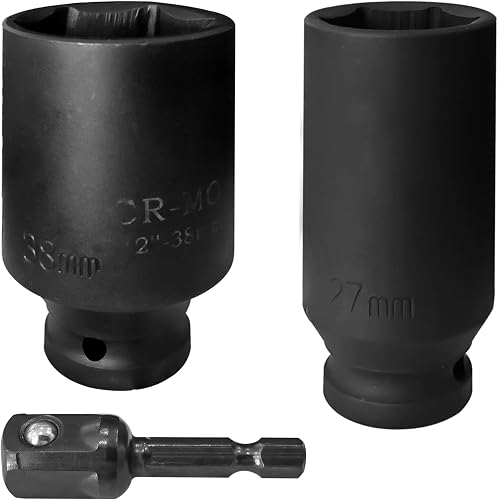 | 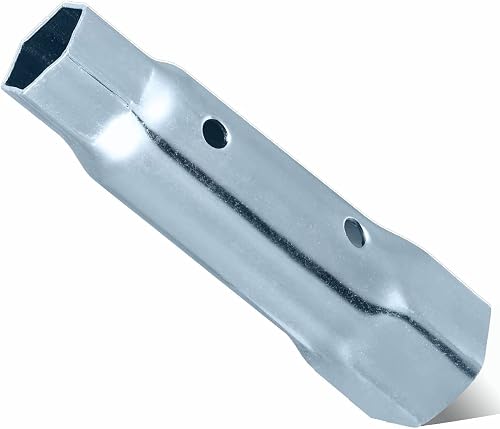 |  |  |  |  |  |
|---|---|---|---|---|---|---|---|---|---|---|
| Product | Anode Rod Element Wrench | Upgraded Element Wrench | Camco Residential Element Wrench | Water Heater Socket Set | RV Element Wrench Socket | 3-in-1 Socket Wrench | 1-1/2 Inch Element Socket | 1-1/16 Inch Socket | Heyous Component Wrench | 1-1/2 and 1-7/8 Socket |
| Brand | ONENESS 369 | buccilly | Camco | GLSJA | Skoutag | Lrichy | ascavs | Niuohoy | heyous | JODDMTTY |
| Best for | Best Overall | Best for Built-In Leverage | Best for Tight Offsets | Best for Ratchet Users | Best for Galvanized Steel | Best for Major Brands | — | Best for Anode Rods | — | Best for Large Elements |
| The listing says | 10-inch length for extra leverage Dual hex 1 1/16 and 1 1/2 socket | Dual 1-1/16" and 1-1/2" socket sizes Integrated pry bar for leverage | 5" long zinc plated wrench Fits 1-1/2" hex screw-in elements | Includes 27mm, 38mm sockets and extension 6-point deep well design | Carbon steel galvanized construction 1-1/2" hex fits screw-in elements | Fits 1-1/16" rods and 1-1/2" elements Compatible with major RV brands | Fits standard residential screw-in elements 6-point 1-1/2 inch socket | Chrome-plated steel finish Connects to standard wrenches | Galvanised carbon steel material 1-1/2 inch and 1-1/16 inch heads | 49057 tool with 1-1/2" and 1-7/8" hex Fits various major water heater brands |
| More information | Price on Amazon | Price on Amazon | Price on Amazon | Price on Amazon | Price on Amazon | Price on Amazon | Price on Amazon | Price on Amazon | Price on Amazon | Price on Amazon |
1. Anode Rod Element Wrench
Best for: RV owners needing extra leverage for stubborn parts.
This 10-inch wrench uses a dual hex design to handle both anode rods and heating elements. The extra length provides more torque than shorter tools, which helps when you’re dealing with parts that haven’t been moved in a long time. Unlike the Camco Residential Element Wrench, this model is built with a longer handle to make the job physically easier.
If you’re struggling with a frozen bolt, use the 1 1/16-inch side for anode rods or the 1 1/2-inch side for heating elements. The added leverage of the 10-inch handle allows you to break the seal without excessive physical strain. If the rod remains stuck, apply a penetrating oil to the threads and wait ten minutes before attempting to turn the wrench again.
The galvanized A3 carbon steel construction is designed for heavy-duty use in various conditions. It’s a solid choice if you want one tool that covers multiple maintenance needs without needing to carry extra impact sockets in your RV. It isn’t for someone who has very limited storage space, as its 10-inch length is larger than several other options.
Pros
- Dual hex design fits multiple sizes.
- Extra length provides significant leverage.
- Durable galvanized A3 carbon steel.
Cons:
2. Upgraded Element Wrench
Best for: Those who want built-in leverage assistance.
This 8-inch wrench features a dual-head design that covers the two most common sizes for water heater elements and anode rods. The inclusion of an integrated pry bar is a helpful touch for those difficult-to-remove components. It’s a straightforward tool that requires no power source, making it a reliable addition to your travel toolkit.
Because it is 8 inches long, it balances leverage with portability better than the 10-inch Anode Rod Element Wrench. However, it may still be too long for some very cramped water heater compartments. It isn’t ideal for users who prefer a dedicated 1/2-inch drive socket that attaches to their own existing ratchet set.
Pros
- Integrated pry bar adds leverage.
- Simple manual operation.
- Compact 8-inch size for storage.
Cons
- Not designed for use with ratchets.
3. Camco 09883 5″ Residential Screw-In Water Heater Element Wrench
Best for: Reaching into tight, restricted spaces.
This 5-inch zinc-plated wrench is designed specifically to fit 1-1/2 inch hex heads on screw-in elements. Its compact size is the main advantage, allowing you to reach into offsets where larger tools or adjustable wrenches simply won’t fit.
If you encounter stubborn elements, insert a sturdy screwdriver through the cross holes. This provides the necessary leverage to break the seal without needing a massive pipe wrench.
This tool is very specific to its size range and doesn’t offer the dual-head versatility of the Lrichy 3-in-1 Socket Wrench. It isn’t the right choice if you also need to remove 1-1/16 inch anode rods, as it only addresses the heating element. If your water heater requires maintenance on both the anode and the element, you’ll need a second, larger tool to complete the job.
Pros
- Fits into very tight spaces.
- Cross holes allow screwdriver leverage.
- Compact and lightweight design.
Cons
- Single-size design lacks versatility.
4. Water Heater Element Socket Wrench Set – Heavy Duty 27mm
Best for: Users who already own a ratchet handle.
This set includes two deep-well sockets and an extension bar, making it a more professional-grade solution. The heavy-duty drive allows you to use your own ratchet or breaker bar, which provides more control and torque than a simple tube wrench. The thin-wall construction helps when working in tight spots behind units.
If you’re dealing with a corroded fitting, use a standard professional-grade drive to apply maximum torque without stripping the element. The 6-point design grips the nut securely to prevent rounding. Use the 38mm socket for large elements and the 27mm for compact fittings.
If you lack space to maneuver, the ultra-thin walls under 3mm allow you to reach cramped areas behind RV units or under sinks without dismounting the entire heater. This set isn’t for those who want a single-piece, all-in-one tool, as it requires managing multiple pieces during your repair.
Pros
- Includes extension bar for reach.
- Deep-well design prevents rounding bolts.
- Professional-grade thin-wall construction.
Cons
- Multiple pieces to keep track of.
5. RV Element Wrench Socket
This tool is made of galvanized carbon steel and offers a dual hex design for both anode rods and heating elements. The 1-1/2 inch end fits most residential screw-in elements, while the 1-1/16 inch end fits all 3/4 inch thread anode rods.
It includes 8mm side holes, which let you insert a screwdriver to create a handle for better grip and turning power. Using this leverage prevents damage to the bolts and protects your hands during the process. It’s designed to be a standalone maintenance tool, meaning you don’t need additional equipment to service your water heater.
If your water heater tank is in a tight, confined space, the lack of a built-in handle is an advantage because the compact tube design fits where larger wrenches can’t reach. However, if you have significant space, you might find the manual leverage process slower than using a standard socket wrench set. Don’t use this tool with powered impact drivers, as the galvanized carbon steel is intended for manual torque only. Regular use of this tool is essential to protect your tank and maintain its performance for years.
6. 3-in-1 Socket Wrench
Best for: Maximum versatility in a single tool.
This wrench handles 1-1/16-inch anode rods, 1-1/2-inch heating elements, and temperature pressure relief valves. The triple-function design saves space in your toolbox by replacing multiple individual sockets. It also features a built-in pry bar to help break loose corroded or stuck joints.
It’s more versatile than a basic 1-1/2-inch element socket, which only handles one size. If you’re servicing Atwood, Dometic, or Suburban water heaters, verify your specific component dimensions first. A perfect fit prevents stripping the nut during removal.
This tool isn’t for someone who only needs to perform a single, specific task, as the multi-function design might feel like overkill for a simple anode rod swap. If you rarely perform maintenance, a dedicated single-size socket is sufficient. However, for frequent repairs, the rust-resistant finish ensures the tool remains functional in damp RV storage compartments.
Pros
- Handles three different valve and element sizes.
- Built-in pry bar provides necessary leverage.
- Rust-resistant finish for long-term durability.
Cons
- More complex than single-purpose tools.
7. 1-1/2 Inch Element Socket
Best for: Simple, focused heating element removal.
This is a specialized 6-point socket designed specifically for 1-1/2 inch heating elements. The 6-point design provides a secure grip on the bolt, which helps prevent the tool from slipping during high-torque applications. It connects to any standard professional-grade ratchet.
If you’re struggling to break a stubborn element loose, use a breaker bar with this socket to gain extra leverage. The deep socket construction ensures full engagement with the heating element, allowing you to apply maximum torque without rounding the edges.
This is a focused tool, making it less useful than the Heyous Component Wrench if you also need to service your anode rod. It isn’t for the user who wants a lightweight, portable tube wrench, as it requires a separate heavy ratchet to function. If your space is too tight for a full-sized ratchet, this tool may not fit.
Pros
- 6-point design prevents slipping.
- Deep socket for full engagement.
- Compatible with standard ratchets.
Cons
- Limited to one element size.
- Requires extra drive tools.
8. 1-1/16 Inch Socket
Best for: Dedicated anode rod maintenance.
This chrome-plated steel socket is sized specifically for 3/4-inch NPT thread anode rods. It’s a durable tool that connects to standard professional-grade equipment, allowing you to use the ratchets or breaker bars already in your garage. Because it’s built to resist rust and corrosion, it remains reliable even when used in the humid, damp compartments where RV water heaters are typically housed.
If your primary goal is to extend the life of your water heater by replacing magnesium rods, this tool is your standard solution. However, this socket lacks the dual-head design found on other multi-purpose wrenches. If your maintenance task requires removing heating elements as well as anode rods, you’ll need a second, specialized tool. Don’t attempt to force this socket onto components that do not match the specific rod size, as the rigid steel construction provides no flex.
Pros
- Chrome-plated for rust resistance.
- Fits standard professional-grade drives.
- Durable steel construction.
Cons
- Only fits anode rod sizes.
9. Heyous 1-1/16 x 1-1/2 x 6 inch RV Water Heater
Best for: Long-term durability in harsh environments.
This tool is crafted from galvanized carbon steel, which is chosen for its resistance to corrosion. It features the standard dual-hex sizes for both anode rods and heating elements, along with an 8mm side hole for using a screwdriver as a lever. It’s a solid, no-frills option for routine RV maintenance.
If you’re working on a standard residential or mobile home water heater, use the larger end for heating elements. Switch to the smaller end when you must service 3/4 inch threaded anode rods.
It’s quite similar in function to the RV Element Wrench Socket. This tool isn’t for those who need a very high-leverage pry bar, as the screwdriver-lever method is less stable than a fixed, integrated bar. If you find the element is seized, apply penetrating oil before inserting the screwdriver to prevent stripping the side hole.
Pros
- Corrosion-resistant galvanized steel.
- Dual hex for versatility.
- Side hole for manual leverage.
Cons
- Lever method requires a screwdriver.
10. 1-1/2 and 1-7/8 Socket
Best for: Owners with larger-than-average heating elements.
This wrench features a dual-head design with both 1-1/2 and 1-7/8 inch sides. The larger 1-7/8 inch side accommodates specific heavy-duty elements that standard tools can’t reach. It’s a necessary upgrade if your water heater model uses non-standard, oversized components.
Check your current element before purchasing. If your element is a standard size, the 1-7/8 inch opening will be too large to grip the nut effectively, leading to stripped edges or a slipped wrench. Use this tool only when the element housing clearly exceeds the common 1-1/2 inch dimension.
This socket is compatible with a wide range of brands, including Rheem, GE, A.O. Smith, and Bradford White. It’s specifically designed for screw-in elements found in these residential and industrial units.
Pros
- Fits larger 1-7/8 inch elements.
- Dual head for versatility.
- Solid construction.
Cons
- Size isn’t standard for most heaters.
- Risk of slipping if used on smaller, standard-sized nuts.
How to Choose in Sixty Seconds
Choosing the Right Size
The most critical step is confirming the size of your anode rod and heating element before you order. Most RV water heaters use a 1-1/16 inch hex for anode rods and a 1-1/2 inch hex for heating elements. However, some brands use different specifications. Check your manual or measure the bolt head directly with a caliper. If you have a standard unit, a dual-hex wrench is usually the best choice, as it saves space in your RV. If you have an unusual or very large element, like those found on certain residential models, you may need a specialized tool like the 1-1/2 and 1-7/8 Socket.
Evaluating Leverage Needs
Water heater elements can seize due to mineral buildup and corrosion. If you’re worried about the force required to break a seal, prioritize a tool with an integrated pry bar, such as the Upgraded Element Wrench or the 3-in-1 Socket Wrench.
Storage and Portability
RV space is limited, so consider how you store your tools. A tube-style wrench is compact compared to a full socket set with an extension bar. If you travel frequently and want to keep your weight down, the Anode Rod Element Wrench or the Heyous Component Wrench are excellent choices.
Frequently Asked Questions
Can I use a regular adjustable wrench to remove my water heater element?
A dedicated socket wrench is the best choice for removing water heater elements. Its deep-well profile fully engages the hex head to prevent slipping and stripping. Avoid using standard adjustable wrenches, as they are often too bulky to fit recessed areas.
Do I need to use plumber’s tape when installing a new element?
It helps create a watertight seal and prevents leaks, which is essential for the long-term health of your tank. Ensure you wrap the tape around the threads in a clockwise direction so it doesn’t unravel when you screw the element into place. A few clean wraps are usually sufficient to provide a secure fit and keep your system running without any unexpected drips.
How often should I check my RV water heater anode rod?
Inspect your anode rod annually, or more often if you have hard water. The rod acts as a sacrificial protector that corrodes to save your tank. If the rod appears thin or covered in buildup, it must be replaced to maintain your water heater.
What should I do if the element is stuck and won’t turn?
If an element is stuck, apply penetrating oil to the threads to help break down corrosion. Using a tool with an integrated pry bar provides the necessary leverage to loosen stubborn fittings. If it remains stuck, reapply oil and use steady, controlled pressure.
Closing
Selecting the best tool for your water heater depends on the specific bolt sizes in your unit and your comfort level with different leverage methods. For most RV owners, a dual-hex wrench featuring the necessary ends provides the utility to manage both anode rods and heating elements with one compact tool.
If you frequently face stuck or corroded fittings, prioritize a model equipped with a pry bar or side holes for a screwdriver. These features allow you to apply the necessary torque to break loose stubborn bolts without stripping the metal or straining your hands. When working in cramped spaces behind a water heater or under a sink, choose a thin-walled socket to ensure the tool fits without requiring you to dismount the entire unit.
Before you start your maintenance, always ensure the water heater is powered off and the system is fully drained to prevent accidents. If you encounter a 1-7/8 inch hex, you must use a specialized socket, as standard 1-1/2 inch tools won’t fit.