Choosing a solar cable entry gland looks simple. It’s a small plastic box that lets wires pass through your RV roof. But the picks here split on a few real things: how many cables fit, what cable sizes they take, whether they come with a cable already attached, and how they’re fixed to the roof.
Best overall: Renogy Solar Double Cable Entry. Its listing points to a mix of screws and adhesive, a warranty on material and workmanship, and a size range of 6mm² to 12mm² cable.
**Best for the cable-size match: BougeRV Solar Double Cable Entry. Its listing covers 14AWG to 10AWG cable.
Best if you want the fewest parts: Solar Cable Entry Gland with 10FT 10AWG Extension Cable. Its listing includes the cable and connectors already attached, so there’s less to assemble.
This guide is for RV owners who want a clean roof pass-through and need to know which options fit their wire.
How We Picked
We kept the listings that clearly stated their cable size range, what came in the box, and how the housing was mounted. A listing needed enough facts for a buyer to judge fit. Products whose listings were vague about cable size or included contents were set aside.
Cable size mattered most because a gland that’s too small won’t seal around the wire, and one that’s too large leaves gaps for water. Some listings give only a title and no feature details, so we couldn’t confirm their cable range and left them out of the ranked picks.
The contents line was the second filter. A listing that says “adhesive not included” or “glue not included” means you’ll need to buy sealant separately, and a listing that includes self-tapping screws gives you a mounting option right away. Knowing this up front keeps you from finding out at the roof with a half-finished kit.
Mounting method was the third check. Most of these housings can be fixed with either glue or self-tapping screws, and the seller’s wording shows which options are supported. Listings that describe a drill-free install tell you the housing doesn’t need a hole for mounting, though the cable still has to pass through the roof, so plan that opening separately.
Comparison Table
All 10 products side by side — scroll sideways to see every column.
| Top Pick | Best for Smaller Wire | Best for IP68 Seal | Best for No-Drill Tape | Best for Single Entry | ||||||
| Preview |  | 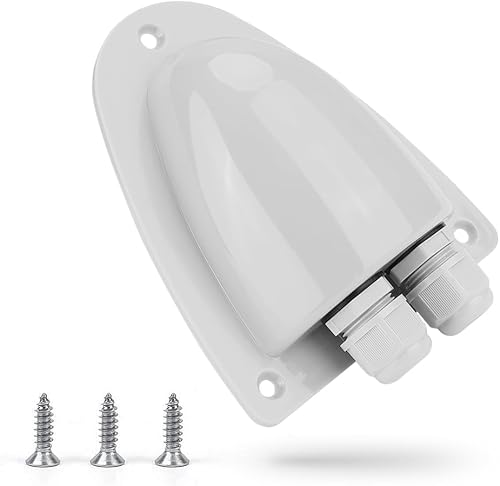 |  |  |  |  |  |  |  |  |
|---|---|---|---|---|---|---|---|---|---|---|
| Product | Renogy Solar Double Cable Entry | BougeRV Solar Double Cable Entry | RESTMO IP68 Solar Cable Entry | Haoguo ABS Solar Cable Entry | Gebildet Solar Cable Entry Gland | Solar Cable Entry Gland with | Solar Cable Entry Gland with | ZOOKOTO IP68 Solar Cable Entry | Waterproof Solar Cable Gland Entry | Solar Cable Entry Gland 10ft |
| Brand | Renogy | BougeRV | Restmo | Haoguo | Gebildet | kbaoele | MOOKEERF | ZOOKOTO | TerraSitze | LYIYEYAN |
| Best for | Best Overall | Best for Smaller Wire | Best for IP68 Seal | Best for No-Drill Tape | — | — | — | Best for Single Entry | — | — |
| The listing says | Installs with self-tapping screws and adhesive, no drilling 100% recyclable ABS plastic with UV resistance | Drop-shaped design with PG11 waterproof connector Fits 14AWG to 10AWG (2mm² to 6mm²) cables | 5.12 x 3.74 x 1.57 inches, IP68 waterproof Cable gland range 6mm to 12mm | Mounts with 3M waterproof tape, no drilling Waterproof gland for 2mm² to 6mm² cables | Set includes 2 double gland sets and 8 screws Fits 6mm² to 12mm² cables | ABS housing with UV-resistant additive IP68 waterproof ring and TUV certification | All-in-one kit with dual-cable ABS housing IP68 waterproof white ABS, drop-shaped design | Single gland measures 108 x 71 x 44 mm 100% recyclable ABS, UV resistant and waterproof | Pre-assembled with 10ft 10AWG wire Built-in screw slot prevents screw slipping | Pre-wired with 10ft (3m) 10AWG PV cables PA nylon and UV-resistant ABS, IP68 rated |
| More information | Buy on Amazon | Buy on Amazon | Buy on Amazon | Buy on Amazon | Buy on Amazon | Buy on Amazon | Buy on Amazon | Buy on Amazon | Buy on Amazon | Buy on Amazon |
1. Renogy Solar Double Cable Entry Gland
Best for: RV owners who want a double entry with screws and adhesive options.
This gland is built from ABS plastic, and the listing says it resists UV, water, and heat and cold. It takes cable from 6mm² to 12mm², so it suits thicker runs than some alternatives. The seller says it can be fixed with self-tapping screws and adhesive, which avoids drilling. The screws are meant to hold against vibration, which matters on a moving vehicle. That fit is different from the BougeRV unit, which covers smaller wire.
The adhesive isn’t included, so you’ll need to buy it separately before mounting.
Pros
- Double entry for two cables
- Screws and adhesive mounting options
- Listed warranty on material and workmanship
Cons
- Adhesive not included
- Range starts at 6mm²
2. BougeRV Solar Weatherproof Double Cable Entry Gland
Best for: Buyers running smaller solar wire, from 14AWG to 10AWG.
This gland uses a drop-shaped body and a silicone gasket, which the listing says helps shed water. Its cable range is 14AWG to 10AWG, or 2mm² to 6mm². The listing also notes a hex-nut design to stop inner nuts from slipping. Stainless steel self-tapping screws are included, but the sealant is not.
Compared with the Renogy unit, which handles thicker wire, this one fits lighter runs. The listing is also clear that it’s a single housing with two cable glands and doesn’t come with a pre-attached cable.
Pros
- Clear cable range for lighter wire
- Hex nuts to stop slipping
- Screws included
Cons
- Sealant not included
- No cable supplied
3. RESTMO 2 Pack IP68 Waterproof Solar Cable Entry Gland
Best for: Buyers who want an IP68-rated seal and a 2-pack.
The pack comes with two units, along with four cable glands and four rubber seals. Adhesive isn’t included.
This pick overlaps with the Renogy unit on cable size. The difference is the multi-unit pack and the IP68 rating. The listing doesn’t say how the rating was tested.
The 6mm to 12mm range is the number to check first. Measure the outside diameter of your cable, not its wire gauge, and confirm it falls inside that span before you buy.
The pack’s four glands and four seals also matter. Having a spare set of seals gives you room to make a second entry point or replace a seal later without ordering again.
Because the adhesive is sold separately, plan how the unit will stay put before you order. The listing describes drill-free mounting with self-tapping screws, which suits a surface you can screw into. On a surface where you would rely on glue alone, you’ll need to buy a suitable adhesive yourself, and the listing doesn’t recommend one.
Pros
- IP68 waterproof rating
- Two units in the pack
- Four cable glands and rubber seals
Cons
- Adhesive not included
4. Haoguo ABS Solar Double Cable Entry Gland
Best for: Buyers who want a no-drill option with tape and a 2mm² to 6mm² range.
This unit comes with 3M waterproof tape on the base, so it can be fixed without drilling. The listing says the cover splits into an upper and lower half that snap together, which covers the screws. It takes cable from 2mm² to 6mm², which suits the same lighter wire as the BougeRV pick.
The listing describes 3M tape on the base as the way to fix it without drilling, and doesn’t say how long the tape holds on a warm roof.
Pros
- 3M tape for no-drill mounting
- Upper and lower covers hide screws
- Curved design
Cons
- Cable range limited to 2mm² to 6mm²
5. Gebildet Black Waterproof Solar Cable Entry Gland
Best for: Buyers with thicker cable who want a multi-unit pack.
This pack has two double-entry glands and eight screws. The listing gives a cable range of 6mm² to 12mm², which matches the Renogy unit. It’s made of UV-resistant ABS and is described as lightweight. Glue isn’t included.
The main difference from the Renogy listing is the multi-unit pack and extra screws. Both cover the same thick cable range.
If you’re routing cable for more than one panel or mounting point, the second gland means you won’t need to buy a separate unit. Check the cable gauge before you buy. The listing range is in square millimeters (mm²), not American Wire Gauge, so compare your cable’s cross-section against 6mm² to 12mm² directly.
Because the gland needs glue to hold it in place, plan to buy an adhesive that suits ABS plastic and your mounting surface. The listing doesn’t name a specific glue, so choose one with the material and surface in mind.
Pros
- Two glands in the pack
- Eight screws included
- Covers 6mm² to 12mm² cable
Cons
- Glue not included
6. Solar Cable Entry Gland with 10FT 10AWG Extension Cable (kbaoele)
Best for: Buyers who want the cable and connectors included.
This kit includes a 10 foot solar cable with a male and female connector. The housing is ABS with UV protection, and the listing gives an IP68 rating and TUV certification. Five stainless self-tapping screws are included, and the seller recommends sealant around the base. The cable is tinned copper.
The included cable saves you buying separate wire. The trade-off is that the length is fixed at 10 feet, so it may be longer than you need for a short run.
Pros
- Includes 10ft cable and connectors
- IP68 rating and TUV certification
- Five screws included
Cons
- Fixed 10ft length
- Sealant recommended but not included
7. Solar Cable Entry Gland with 6FT 10AWG Solar Cable (MOOKEERF)
Best for: Buyers who want a shorter pre-wired run.
This kit includes a 6 foot cable in red and black, plus extra connectors, rubber seals, screws, and two wrenches. The housing is white ABS with an IP68 rating. The listing gives 10AWG tinned copper wire rated for high voltages and wide temperature range. The housing is described as low-profile and drop-shaped.
Compared with the 10ft kit, this one is shorter, which suits a close mounting point. A shorter run means less cable to route through the roof and less excess to coil and hide, so the 6 foot length makes sense when your panels and charge controller sit near the gland.
The cable is what you’re paying for, so measure before you buy. Check the distance from the roof opening to your controller or battery bank and allow a little slack for bends. If that distance is longer than 6 feet, the 10ft kit is the safer choice, since a short cable can’t be extended without adding a connection.
The listing doesn’t say whether the kit is suited to every roof type or what the housing material does under long exposure beyond the stated temperature range, so confirm those points with the seller if your installation depends on them.
Sealant isn’t included, so plan to buy a suitable adhesive sealant before you mount the housing. The screws are included for mounting, but the seal depends on the sealant you add.
Pros
- Pre-wired red and black cable
- Two assembly wrenches included
- Low-profile drop-shaped housing
Cons
- Sealant not included
8. ZOOKOTO IP68 Waterproof Solar Cable Entry Gland by Restmo
Best for: Buyers who need a single cable entry.
This is a single-entry housing, measuring 108 x 71 x 44 mm. It’s made of ABS, which the listing describes as UV resistant, waterproof, lightweight and durable, and it’s said to keep its durability in bad weather. Its curved top is meant to reduce wind resistance and noise to a degree.
Mounting is flexible. The inlet housing has self-fixing holes, so you can glue it or drill and use stainless steel self-tapping screws. The listing suggests choosing between the two based on the mounting position and the sealing you need. Either way, you pass the solar cable connector through the housing and fix it in place.
It takes cable from 2mm² to 6mm², which the listing says covers most round cables for solar panels, air conditioning and lighting. Check your cable’s gauge against that range before you order, since a cable outside it won’t seal properly in this gland.
The single entry is its main difference from the double units above. If you need two cables, this isn’t the pick.
Pros
- Single-entry housing
- Black or white finish
- Self-fixing holes for glue or screws
Cons
- Only one cable at a time
9. Waterproof Solar Cable Gland Entry (TerraSitze)
Best for: Buyers who want a pre-wired cable with glands.
This kit includes a 10 foot 10AWG cable with connectors, two glands, and four stainless screws. The housing is ABS, and the glands are nylon with an IP68 rating. The listing notes a groove on the base for adhesive and built-in screw slots that stop slipping. Adhesive isn’t included.
Pre-wiring matters because it removes a step from the install. The cable is already attached to the connectors, so you don’t have to strip, crimp, or thread wire through the glands on the roof. You pass the cable through the gland, tighten the cap, and fix the housing in place. That leaves less room for a loose connection or a poorly sealed pass-through.
The glands do the sealing work. Each cable runs through a nylon gland with a lock nut washer, which is what keeps water and dust out where the wire enters the box. The base groove is there for adhesive, so if you plan to glue the housing, buy adhesive separately. If you mount with the screws instead, the built-in screw slots are meant to keep the screws from slipping during tightening.
Check the cable length before you order. Ten feet is fixed, so if your panel is far from the entry point, you may need a longer run or a different kit.
It’s similar to the other 10ft kits, but the listing focuses on the nylon glands and the base groove for adhesive.
Pros
- Pre-wired 10ft cable
- Nylon glands with IP68 rating
- Built-in screw slots
Cons
- Adhesive not included
10. Solar Cable Entry Gland with 10ft 10AWG Extension Cable &
Best for: Buyers who want the most complete kit.
This kit comes with 10 feet of 10AWG extension cable, MC-4 connectors, and two sets of cable. The housing is ABS with an IP68 rating and heavy-duty PA nylon glands. The listing mentions anti-slip screw slots and a recessed base groove. Stainless screws are included, and the listing says the kit suits 12V and 24V systems up to 300W.
The listing offers the most in one box, which is its main appeal. Because the cable is already attached, you skip the job of threading wire through a gland, and the glands and seals are already matched to the housing.
The anti-slip screw slots and recessed base groove are meant to help the housing stay put. The listing says the groove increases the surface the adhesive touches, so a sealant bed will bond better. It also says you can mount with the included stainless self-tapping screws instead. Choose one method or the other based on what the surface can take.
The listing says the kit fits typical 12V and 24V panel projects from 100 to 300W, including RVs, vans, boats, sheds, and garages. If your panel is larger, or your cable run is longer than the 10 feet supplied, this kit isn’t the right match.
Pros
- Two 10ft cable sets
- MC-4 connectors included
- Stainless screws included
Cons
- Sealant not included
How to Choose in Sixty Seconds
Match the cable size first
Check the gauge on your existing solar wire before you buy. Some listings cover 14AWG to 10AWG, and others cover 6mm² to 12mm². If the range doesn’t include your wire, the gland won’t seal properly. Look at the range on the listing and confirm it matches your cable.
Decide whether you need a cable included
If you’re starting from scratch, a kit with a pre-attached 10ft or 6ft cable saves a step. If you already have wire, a housing-only unit is simpler and avoids a fixed length. Check whether the included cable length suits where your panel sits.
Plan the mounting before you order
Most listings let you use screws or adhesive. Screws are included with many units, but adhesive is usually not. Buy a roof-rated sealant in advance. Also confirm whether your roof is aluminum framed, since some listings are written for that.
Closing
Start with your cable size, then decide between a single or double entry and whether you want a pre-wired kit. For most RV owners the Renogy Solar Double Cable Entry is a solid overall pick, and the BougeRV unit is the one to check first if your wire is thinner. Measure your cable, buy the sealant you need, and you’ll have a clean roof pass-through.
Measuring comes first because the gland only seals if the cable fits its range. Renogy lists cable types from 6mm² to 12mm², while BougeRV covers 14AWG to 10AWG, which is roughly 2mm² to 6mm². Those ranges barely overlap, so a wire that sits near the edge of one can be a poor fit for the other.
The other choice is whether the gland comes with cable attached. The kbaoele, MOOKEERF, TerraSitze and LYIYEYAN kits ship with 10AWG extension cable and connectors already fitted, which saves threading a wire through by hand. If you already have your own run of solar cable, a bare housing such as the Renogy or Haoguo will suit you better.
Count the cables before you buy, too. A double entry lets two runs pass through one housing, which is useful when you’re routing both a panel lead and a second feed. If you only have one cable, a single entry like the ZOOKOTO housing keeps the footprint on the roof smaller.
Frequently Asked Questions
Do I need to drill a hole in my RV roof?
Not with most listings here. Several products say they mount with self-tapping screws or adhesive, which avoids drilling. The Haoguo unit uses 3M tape on its base, which the listing says avoids drilling too. Check the mounting method on the listing before you buy, and plan to use a roof-rated sealant around the base either way, since the listings don’t promise a leak-free seal on their own.
What cable size do I need?
It depends on your solar wire. Two listings cover 14AWG to 10AWG, which is 2mm² to 6mm², while others cover 6mm² to 12mm². Measure the existing wire or check the gauge printed on the jacket. If the number falls outside the listed range, the gland won’t seal properly around the wire.
Should I buy a kit with cable included or a housing alone?
A kit saves time if you’re starting a new install. The 10ft and 6ft kits from kbaoele, MOOKEERF, TerraSitze and LYIYEYAN come with pre-attached cable and connectors. The trade-off is the length is fixed, so a housing-only unit like the BougeRV or Renogy suits longer runs.
Is an IP68 rating enough to keep water out?
The rating is a good sign, but it doesn’t replace sealant. The listings don’t say how the rating was tested or for how long. Pair any gland with a roof-rated sealant around the base and check the seal after your first big rain. The gasket and nut inside the gland also matter, so tighten the cap firmly on every cable.