Selecting the right wheel chock depends on the space between your tires and your preference for a simple or heavy-duty stabilizer design.
Best overall: BAL 28010 X-Chock, which provides reliable stability by working with your tires’ natural movement and includes a plated ratchet wrench with a comfort bumper for easy daily use.
Best for wide gaps: BAL 28024 X-Tended Fit, which is specifically engineered to handle larger tandem axle spaces where standard stabilizers might not reach or secure the tires properly.
Best heavy-duty build: Stromberg Carlson T-Chock, which offers a robust scissor-style design that fits a wide range of tire spacings and is built to withstand the wear of frequent travel.
This guide is for RV owners who want to stop their trailers from swaying while parked and need a simple, effective solution.
How We Picked
We compared 48 different Amazon listings for RV wheel stabilizers to narrow down the most effective options. To make our list, a product had to clearly state its adjustment range, the materials used in construction, and what items were included in the box. We excluded any items that lacked clear specifications regarding their fitment or intended use. Our selections are based strictly on the features and capabilities provided by the manufacturers to ensure you have the data needed to make an informed choice.
All 10 products side by side — scroll sideways to see every column.
| Top Pick | Best for Rust Resistance | Best for Wide Axles | Best for Frequent Use | Best for Quick Setup | Best for Versatile Fit | Best for Easy Storage | Best for Long Extension | Best for Basic Needs | ||
| Preview |  |  | 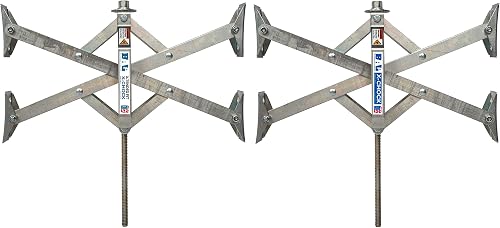 |  |  |  |  |  |  |  |
|---|---|---|---|---|---|---|---|---|---|---|
| Product | BAL 28010 X-Chock | BAL 28012 X-Chock | BAL 28024 X-Tended Fit | Stromberg Carlson T-Chock | Original Camper X-Chock | PAULINN Camper Stabilizer | Nilight Wheel Stabilizer | Camper X Wheel Chocks | Camco RV Wheel Stops | BAL 28005 Deluxe Chock |
| Brand | BAL | BAL | BAL | Stromberg Carlson | EPOARTIST | PAULINN | Nilight | Rvdeaa | Camco | BAL |
| Best for | Best Overall | Best for Rust Resistance | Best for Wide Axles | Best for Frequent Use | Best for Quick Setup | Best for Versatile Fit | Best for Easy Storage | Best for Long Extension | — | Best for Basic Needs |
| The listing says | Foot pad for 2,000 lb. tongue jack Brand: BAL RV Products Group | Crafted from rust-resistant zinc-coated steel Reduces tire shift and sway | Provides added stabilization Country of origin: United States | Stabilizes travel trailer or camper Works with tandem axle configurations | Fits gaps from 3.5" to 11.5" Includes wrench for installation | Matches wheel clearances from 3.5" to 12" X-shaped design distributes load evenly | Prevents tire shift with opposing force Includes built-in wrench | USA design, compatible with electric drill Extends up to 17 inches | Secures tandem tires while parked Fits 26-inch to 30-inch diameter tires | Dimensions: 10.414 cms x 12.7 cms x 32.766 cms Product type: Auto accessory |
| More information | Price on Amazon | Price on Amazon | Price on Amazon | Price on Amazon | Price on Amazon | Price on Amazon | Price on Amazon | Price on Amazon | Price on Amazon | Price on Amazon |
1. BAL 28010 X-Chock Tire Locking Chock
Best for: Standard tandem axle trailer owners.
This stabilizer works by applying force between your tires to stop them from shifting while you’re parked. It’s designed to move with the tires rather than against them, which helps maintain a solid stance for your RV. You get a plated ratchet wrench with a comfort bumper, making it easier to tighten the device into place without hurting your hands.
If you have a very large gap between your tires, the standard model won’t reach. In that case, you might prefer the BAL 28024 X-Tended Fit instead. This model is built for standard applications and features a rust-inhibitive coating to help it survive the elements. It’s a straightforward choice for anyone wanting a proven design from a well-known name in the industry.
Many owners make the mistake of using these chocks as a primary braking system. They’re designed only for stabilization once the trailer is already parked and leveled. Relying on them to hold the weight of the trailer on a steep incline can damage the mechanism or fail to prevent rolling. Always set your wheel chocks first, then apply the X-Chock to eliminate the rocking motion.
Pros
- Includes comfort-grip ratchet wrench
- Rust-inhibitive coating for durability
- Works with tires’ natural movement
Cons
- Limited to standard axle spacing
2. BAL 28012 X-Chock
Best for: Users wanting a reliable, long-term solution.
This pair of chocks is crafted in the USA from zinc-coated steel, which helps it resist rust in harsh outdoor conditions. It features a compact design that adjusts from 1-3/8″ to 10″, allowing it to fit into tight spaces between wheels on various trailers and RVs. You can even add an optional lock to keep your gear secure while you’re away from your site.
If your trailer tires are spaced less than 1-3/8″ apart, this model won’t fit. Check your gap before purchasing to ensure the mechanism can slide into place. When installing, apply the opposing force between your tandem tires to effectively reduce sway and tire shift. This creates a stable platform for your RV, but you must ensure the chocks are tightened securely with the included 3/4″ ratchet wrench.
While the BAL 28010 X-Chock is a popular pick, this model includes a limited lifetime warranty for long-term coverage. It’s a solid choice for those who prioritize durability and want a product that handles frequent setup and teardown.
Pros
- Made in the USA
- Rust-resistant zinc coating
- Supports optional lock for security
Cons
- Requires manual wrench operation
- Not compatible with gaps under 1-3/8″
3. BAL 28024 X-Tended Fit X-Chock Tire Locking Chock
Best for: Trailers with wide axle spacing.
This set of two chocks is designed to handle the wider gaps found on certain tandem axle trailers. Like other BAL models, it uses the tires’ natural movement to provide stabilization and prevent shifting. It comes with the necessary ratchet wrench, so you’re ready to set up as soon as you arrive at your campsite.
If your trailer has narrow wheels, this may be overkill, and a standard model like the BAL 28010 X-Chock would be a better fit. This product focuses on stability for larger configurations where standard stabilizers fall short.
Measure the distance between your tires before purchasing. If the gap exceeds the manufacturer’s specified range, this heavy-duty steel tool is the correct choice to lock the wheels in place. Using a standard chock on a wide-axle configuration often results in a loose fit that fails to stop movement.
Pros
- Designed for wide tandem axles
- Includes setup ratchet wrench
- Simple, effective stabilization
Cons
- Not for narrow wheel gaps
- Requires specific axle spacing for proper tension
4. Stromberg Carlson JBP-T217.2 Tandem Axle T-Chock
Best for: Heavy-duty, frequent use.
The T-Chock uses a scissor design to lock your tires in place, which helps keep the floor of your coach steady. It fits tires spaced 2″ to 17″ apart, making it a versatile option for many different camper and trailer configurations. The heavy-duty materials are meant to last through years of regular trips and outdoor exposure.
Measure the gap between your tires before purchasing. If your tires sit closer than 2″ or further than 17″ apart, this model won’t engage properly. You must ensure the device is centered between the axles to distribute pressure evenly. If the chocks are misaligned, the trailer may still shift despite the locked position.
This is a more robust option compared to the lighter standard scissor-style stabilizers, which might suit those who want extra security on larger rigs. It’s a reliable tool for anyone who wants to ensure their trailer stays exactly where they parked it. Always use the included wheel chock wrench to tighten the scissor mechanism until the tires are firm. If you fail to tighten it fully, the vibration of movement inside the RV will loosen the grip over time.
Pros
- Fits wide 2″-17″ range
- Durable heavy-duty construction
- Includes wheel chock wrench
Cons
- Heavier to carry and store
5. Original Camper X-Chock
Best for: Fast, effortless setup.
These stabilizers stop the rocking sensation that occurs when you walk around inside a trailer. They adjust from 3.5″ to 11.5″, covering most standard dual or tandem axle setups like 5th wheels, campers, and toy haulers. You can install them in under 20 seconds using the provided wrench, making them ideal for quick arrivals.
If your trailer still moves after installation, you likely haven’t expanded the jack enough to create firm tension against both tires. Tighten until the unit feels solid to the touch. Avoid the mistake of relying on these as your primary braking system; always engage your wheel chocks first to prevent rolling before securing the stabilizer.
The BAL 28012 X-Chock is crafted from rust-resistant, zinc-coated steel for long-lasting performance. While the manual wrenching requires a bit of physical effort, it eliminates the need for power drills.
Pros
- Extremely fast setup time
- Wide 3.5″-11.5″ adjustment range
- Includes 1-year warranty
Cons
- Requires manual wrenching
- Not a substitute for primary wheel chocks
6. PAULINN Camper RV Wheel Chock Stabilizer 2 Sets
Best for: Versatile fit across different trailers.
These stabilizers fit wheel clearances from 3.5″ to 12″, making them highly adaptable to various RV and camper models. The X-shaped design helps distribute the load evenly, which improves stability on different types of terrain. You also get a storage bag, which keeps your wrench and chocks organized when they aren’t in use.
The PAULINN model uses cast iron and reinforced connections, which differs from the steel construction of common scissor-style stabilizers. It’s a good choice for those who need a versatile tool that fits many different axle widths.
If your wheel gap measures less than 3.5 inches, these chocks won’t fit. Attempting to force them into a tighter space risks damaging the mechanism or the tire sidewall. Always measure your gap while the trailer is parked on level ground to ensure you fall within the 3.5 to 12-inch functional range.
The cast iron build provides significant durability, but it adds weight compared to lighter steel alternatives. If you prioritize easy handling during setup, account for this extra heft. Use the included ratchet wrench or your own electric screw head to tighten the chocks until the side patterns grip the tire firmly.
Pros
- Includes convenient storage bag
- Fits 3.5″-12″ wheel gaps
- Durable cast iron construction
Cons
- Heavier than steel alternatives
7. Nilight Wheel Chock Stabilizer
Best for: Compact and easy storage.
This stabilizer fits gaps between 3″ and 10″, making it a solid choice for most travel trailers and trucks. It includes a built-in wrench that rotates 360 degrees, so you don’t need to carry extra tools to get your RV secured. This “all-in-one” approach is great for reducing the amount of gear you have to pack.
Before you buy, measure the distance between your tires. If your gap is less than 3″ or greater than 10″, these chocks won’t lock into place, leaving your trailer prone to shifting. Always confirm your specific tire spacing to ensure the stabilizer can apply the necessary opposing force.
While the BAL 28012 X-Chock relies on a separate wrench, this model’s integrated tool makes it faster to use. It’s designed to keep your trailer stable so you can enjoy a quiet night’s sleep without the trailer moving every time you shift. Forgetting to secure your tires properly often results in a restless night; using this tool ensures your trailer stays exactly where you parked it.
Pros
- Integrated 360-degree wrench
- Fits 3″-10″ gaps
- Fast, tool-free installation
Cons
- Specific to smaller gap ranges
8. Camper X Wheel Chocks
Best for: Maximum extension range.
These stabilizers fit wheel distances from 4″ to 17″. This range covers everything from compact travel trailers to large-scale toy haulers and Class A motorhomes. The units feature thickened, heavy-duty steel designed to resist corrosion during long-term outdoor exposure.
If you’re setting up, use an electric drill to operate the mechanism. This fourth-generation design is currently the fastest stabilizer to deploy on the market. By utilizing a central reaction force against the tires, the chocks eliminate movement and increase overall safety.
If your tire gap is under 4 inches, these units won’t fit, and you must choose a smaller stabilizer model. Conversely, if you own a heavy-duty fifth wheel, the extra thickness of this steel provides the stability required to prevent shifting while parked.
Pros
- Fits up to 17″ gaps
- Compatible with electric drills
- Thickened, heavy-duty steel
Cons
- Overkill for small trailers
- Requires at least 4″ of clearance
9. Camco RV Wheel Stops
Best for: Tandem axle security.
These wheel stops are made of durable, UV-stabilized resin, making them a robust alternative to other chocks. They fit between tires with a wide range of diameters and spacings. They’re very easy to install and work by securing the tandem tires to prevent unwanted movement while you’re parked.
Measure your tire gap precisely before buying. If your spacing falls outside the intended range, these won’t lock into place or provide the necessary resistance. Unlike the BAL X-Chock, these aren’t adjustable for a wide variety of gaps. Using them on mismatched spacing risks the unit slipping or failing to stabilize the trailer during re-hitching.
If your trailer fits the specific diameter and spacing requirements, these offer a reliable, low-maintenance solution. They’re simple to use and effective for standard tandem configurations.
Pros
- Lightweight resin construction
- UV-stabilized for longevity
- Simple, easy installation
Cons
- Fixed spacing range only
- Requires precise measurement before purchase
10. BAL 28005 Deluxe Tire Chock
Best for: Basic stabilization needs.
This is a straightforward, single-chock solution for your trailer. It’s designed as a basic auto accessory to help keep your vehicle from rolling while parked. Because it’s a single unit, you may need to purchase more than one depending on how many axles you want to stabilize.
It lacks the complex “X” design of standard scissor-style stabilizers, making it a simpler, more traditional option for those who don’t need the extra force of that specific mechanism. It’s a compact product that’s easy to store in a storage compartment.
Pros
- Compact, simple design
- Easy to store
- Reliable, traditional build
Cons
- Basic functionality only
How to Choose in Sixty Seconds
Measure Your Gaps
Before you buy, measure the distance between your tires accurately. Most stabilizers have a specific range, such as 3″ to 10″ or 4″ to 17″. If you guess the distance, you might end up with a product that’s too short to expand or too long to fit. Always check the measurement at the center of the tires where the chock sits. If your measurement falls at the very edge of a product’s range, opt for a model that covers your distance comfortably in the middle of its capacity. Failing to match the gap correctly means the device can’t apply the necessary opposing force to stop tire shift.
Consider Your Tools
Decide if you want a built-in wrench or if you prefer using your own tools. Some models, like the Nilight, include an integrated wrench to save time and prevent you from losing a separate tool. Others, like the BAL 28012, require a manual wrench or an electric drill. If you already have a power drill, look for a model that explicitly lists drill compatibility, as this is the fastest way to set up. If you choose a model with a built-in wrench, ensure the handle design allows for a full 360-degree rotation to avoid frustration in tight spaces.
Check Material Quality
Look for steel or cast iron if you want the longest life for your stabilizer. These materials handle the pressure of locking tires better than plastic or resin versions. Look for terms like “rust-inhibitive coating” or “zinc-coated steel,” as these protect your chocks from rain, snow, and salt. While heavier, these materials are much less likely to bend or break under the torque required to stabilize a heavy trailer. If you travel to areas with harsh weather, prioritize a finish specifically rated for outdoor use. A quality finish keeps your investment working smoothly for many seasons. The listing doesn’t mention safety or replacement criteria. Always prioritize heavy-duty gauge steel for the best performance.
Related guides
- 10 Best RV Wheel Chock Stabilizer Locks for Steady Parking
- 10 Best RV Wheel Chock Stabilizer Locks for Trailer Stability
Frequently Asked Questions
Can I use these stabilizers on any type of trailer?
Most X-chock stabilizers are designed specifically for tandem axle trailers by applying pressure between two tires to lock them in place. These products do not work for single-axle trailers, which require standard wheel chocks. Always measure your axle spacing to ensure the device fits your specific trailer type.
Will these stabilizers prevent my RV from swaying entirely?
These products are designed to stop tire shift rather than all suspension movement. While some sway may persist, stabilizers significantly firm up the feel of the trailer. Pairing these with leveling jacks often provides the most solid experience for users.
Do I need to lubricate the moving parts of my stabilizer?
Yes, keeping the threads and moving parts lubricated ensures smooth operation. Exposure to dust and moisture can make the adjustment mechanism stiff over time. A light application of silicone-based lubricant or dry graphite spray helps prevent rust and keeps the threads moving freely.
What should I do if the stabilizer is too tight to remove?
If you find the stabilizer is stuck, don’t force it with excessive pressure, as this can damage the threads. First, ensure the ratchet wrench is set to the correct direction to loosen the device. If it remains stuck, try to gently rock the trailer back and forth slightly to relieve the pressure on the tires. This often releases the tension and makes it much easier to loosen the stabilizer.
Closing
Selecting the right stabilizer depends entirely on your trailer’s axle spacing. Before purchasing, manually measure the gap between your tires, as models vary significantly. Options like the Nilight or standard scissor-style stabilizers fit gaps as narrow as 3 inches, while the Stromberg Carlson T-Chock or Rvdeaa stabilizers accommodate wider gaps reaching up to 17 inches.
If you prioritize setup speed, look for models with built-in wrenches or those compatible with power drills. Using a drill can reduce installation time to under 20 seconds, far faster than manual ratcheting. However, ensure your chosen model is rated for your specific trailer type, such as fifth wheels or toy haulers.
Mistakenly choosing a stabilizer that doesn’t reach your tire gap is a common error that renders the device useless. If your spacing is under 3.5 inches, avoid the Camco resin stops, which require at least that much room. Always verify the fitment range against your measured gap to ensure the unit applies the necessary opposing force to eliminate movement.