Butyl rubber roof tape is a simple fix for a lot of RV leaks. But the tapes on the market differ a lot. Some are wide, some are thick, some have a reinforced layer, and some are just a narrow putty strip for seams. The real question is which one fits your repair. Here we compare what each listing states, and we point out where the choice really matters.
Best overall: EternaBond RoofSeal White, because its listing says it works on EPDM, TPO, aluminum, and fiberglass, and that the backing and sealant make a barrier with no extra sealing needed.
Best for wide roof areas: Kohree Butyl Sealant Tape, since its listing names a 6-inch width and a 50-foot roll for covering larger sections at once.
Best for tough, heavy-duty jobs: HSS Butyl Sealant Tape, whose listing describes a reinforced EPDM carrier layer for tear resistance under mechanical stress.
This guide is for RV owners who want to pick one tape for one repair and get it right the first time.
How We Picked
We compared 16 Amazon listings for butyl rubber RV roof tape. To earn a place, a listing had to state clear facts: the size, the surfaces it bonds to, what is included, and any warranty or temperature range the seller gives.
A listing that says “4 inches by 50 feet” lets you judge whether a patch will cover your problem area, and a listing that names the materials it bonds to, such as EPDM, TPO or metal, tells you whether it suits your roof. Temperature range matters for the same reason. A tape rated for a cold-weather low and a hot-weather high is a more reliable choice than one that’s silent on both.
Three listings give only a title and no feature details, so this guide does not cover them.
Each product is described only by what its own listing states.
Comparison Table
All 10 products side by side — scroll sideways to see every column.
| Top Pick | Best for Corners | Also Great | Best for Many Repairs | Best for Long Lifespan | Best for Mechanical Stress | Best for Filling Gaps | Best for Marine Jobs | |||
| Preview |  |  |  |  |  |  | 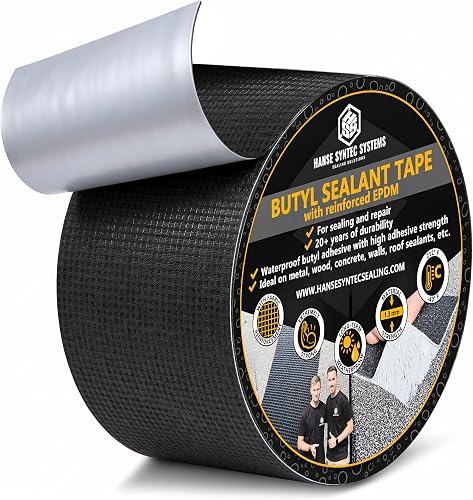 |  |  | 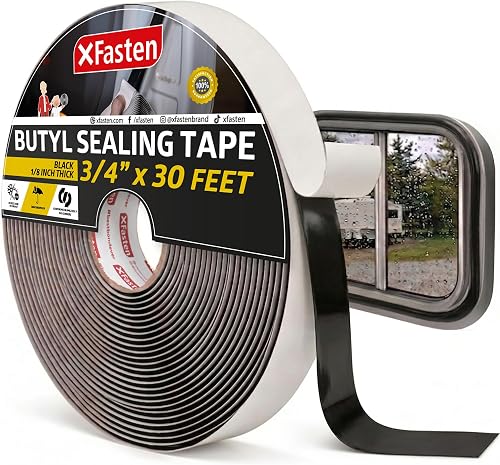 |
|---|---|---|---|---|---|---|---|---|---|---|
| Product | EternaBond RoofSeal White | Dicor BT-1834-1 Butyl | Kohree Butyl Sealant Tape | RV Roof Tape White | Butyl Sealant Tape RV Roof | Trazon RV Roof Seal Tape | Butyl Sealant Tape HSS | Lichamp Butyl Tape RV | X-Haibei Butyl Seal Tape | XFasten Butyl Sealing Tape |
| Brand | EternaBond | Dicor | Kohree | CHUANGSEED | Ramkle | Trazon | HSS | Lichamp | X-Haibei | XFasten |
| Best for | Best Overall | Best for Corners | Also Great | Best for Many Repairs | — | Best for Long Lifespan | Best for Mechanical Stress | Best for Filling Gaps | — | Best for Marine Jobs |
| The listing says | Bonds to metal, RV roofs, boats and more Waterproof, airtight seal with no extra sealing | Seals uniquely shaped joints without gaps Continuous roll means no skips or runs | Butyl tape resists UV, moisture and corrosive chemicals Designed for RV roofs, windows and doors | 6 in wide by 50 ft long Bonds to EPDM, metal, TPO, Hypalon, wood and more | Premium butyl resists UV, moisture and chemicals No adhesive or filler needed, just peel and apply | Commercial-grade butyl rubber, rated 20-35 years Creates an immediate waterproof, airtight seal | Fully waterproof, airtight butyl adhesive barrier EPDM top layer resists UV, water, heat and cold | Made of rubber for durability and long life 3/4 in x 1/4 in x 20 ft, includes 6.3 in squeegee | Mess-free, airtight putty tape for RVs, windows and boats Works on glass, metal, wood, plastic and rubber | Versatile butyl putty tape for construction, auto and marine Made of EPDM rubber, resists water, chemicals and extreme temperatures |
| More information | Price on Amazon | Price on Amazon | Price on Amazon | Price on Amazon | Price on Amazon | Price on Amazon | Price on Amazon | Price on Amazon | Price on Amazon | Price on Amazon |
1. EternaBond RoofSeal White 4″ x25′ MicroSealant UV Stable RV Roof
Best for: Owners sealing metal, EPDM, or TPO roofs who want a one-step repair.
The listing says this tape has an aluminum backing with a layer of MicroSealant, and that together they form a waterproof, moisture, and air-tight barrier with no extra sealing needed. It also says it stays flexible down to -57°F and is UV stable. For a roof that sees real temperature swings, those are the facts that matter most. A backing that resists UV means less worry about the tape breaking down in summer sun.
The listing also says the tape is one step, with no trays or solvents to clean up. That makes it easier to finish a repair in one session. If you need a wider sheet to cover a large seam, the Kohree tape below is the better fit.
Pros
- Aluminum backing with MicroSealant layer
- Bonds to EPDM, TPO, Hypalon, aluminum, and fiberglass
- Stays flexible to -57°F and UV stable
- One-step application, no solvents
Cons
- Listed as flexible only to -57°C (-70°F), so use in colder conditions falls outside its stated range.
2. Dicor BT-1834-1 Butyl Seal Tape
Best for: Owners sealing awkward joints, corners, and S-locks.
This is a narrow strip, 1/8 inch thick and 3/4 inch wide, on a 30-foot roll. The listing says it sticks to smooth or irregular surfaces and can be laid along unusual patterns. Because it comes on a continuous roll, the listing says there are no skips or runs in the seal. For a tight joint, that’s the main point.
The listing also says it works with a caulk-and-frame system to give a double barrier. If you want one tape to cover a wide roof panel, the EternaBond tape above is the better choice.
Pros
- Conforms to S-locks and irregular surfaces
- Continuous roll with no skips in the seal
- Works as a double barrier with caulk and frame
- High-tack adhesive for a strong bond
Cons
- Narrow width, so it isn’t made for large areas
3. Kohree Butyl Sealant Tape
Best for: Owners who need a wide tape for roofs, windows, and doors.
This tape is 6 inches wide and 50 feet long, which covers more area per pass than most options. The listing says it resists UV, moisture, vapor, and corrosive chemicals, and that it bonds to metal, EPDM, PVC, Hypalon, and TPO. The listing also lists a wide range of uses, from RV roofs to fifth wheels and Airstreams.
Width matters most on a roof seam or a long window frame, where a narrow strip would need several overlapping passes. A single wide strip can close a seam in one run, which means fewer joints for water to find later.
The listing says it’s self-priming and flexible enough for flat surfaces, curves, and corners. Self-priming means the tape is meant to stick to a clean surface without a separate primer coat. Flexibility matters on corners, where a stiff tape would lift or tear as the panels move.
It doesn’t state a temperature range, so check the seller page if you live somewhere very cold.
Pros
- 6-inch width covers more area per pass
- Bonds to metal, EPDM, PVC, Hypalon, and TPO
- Self-priming and flexible on curves and corners
- Lists a wide range of RV and trailer uses
Cons
- Listed compatibility covers Metal, EPDM, PVC, Hypalon and TPO, so wood or fiberglass surfaces are outside its stated list.
4. RV Roof Tape White
Best for: Owners who want a long roll for many repairs.
This tape is 4 inches wide and 50 feet long. The listing says it’s made of PDA film and butyl rubber, and that it stays flexible down to -58°F. It also says the PDA film is durable and resists abrasion and corrosion. The roll length is the key point for most buyers.
The listing says it bonds to EPDM, metal, galvanized steel, TPO, Hypalon, wood, and fiberglass. Check your roof material against that list before you buy. If your roof is one of those materials, the tape is a reasonable match for it.
The listing also says the tape is designed to be used without any extra sealant. That means you can press it into place and expect a waterproof, airtight seal on its own. It’s a useful point to confirm, because some tapes need a separate sealant on top.
Installation is easiest on flat areas, but the listing says it can also go on corners, curves, and other surfaces. Keep the surface clean and dry before you start, and press the tape down firmly so it makes full contact.
Pros
- A single roll is long enough to cover several separate repairs.
- PDA film and butyl rubber construction
- Stays flexible to -58°F
- Bonds to a broad list of roof materials
Cons
- Listed as flexible to -58°C (-72.4°F) and measures 6 inches wide, which runs wider than a 4-inch repair strip needs.
5. Butyl Sealant Tape RV Roof
Best for: Owners who want a heavy-duty tape for doors, decks, and beams as well as roofs.
The listing describes this tape as a permanent fix rather than a temporary one, and it is sold in a 4-inch-wide roll. It says the tape is tested to last for many years of outdoor use and works from -40°F to 150°F. The listing also says it works on wood, metal, plastic, and rubber, so it suits more than roofs.
The listing says the surface may look uneven, but that this doesn’t affect how the tape performs. It also warns not to use it with mineral spirits, benzene, or silicone on the surface.
Pros
- Listed to last for many years outdoors
- Works from -40°F to 150°F
- Bonds to wood, metal, plastic, and rubber
- A wide roll of this tape handles repairs quickly.
Cons
- Must not be used with mineral spirits or silicone
6. Trazon RV Roof Seal Tape 4 Inch x 55 Ft
Best for: Owners who want a professional-grade tape with a long stated lifespan.
Built to stay in place for years, this 4-inch by 55-foot tape states a range of -40°F to +230°F and says it resists high UV, rain, and snow. Those are the main numbers to check before you buy.
The listing says it bonds to EPDM, TPO, PVC, metal, wood, and fiberglass, and that it needs no primer or tools. It’s self-adhesive, so the work is clean and simple.
Pros
- Longest roll here at 55 feet
- States a -40°F to +230°F working range
- Self-adhesive with no primer or tools needed
- Bonds to EPDM, TPO, PVC, metal, wood, and fiberglass
Cons
- Listed for surfaces from EPDM to fiberglass, so bonding to other roof materials outside that list is left out.
7. Butyl Sealant Tape 4 Inch x 50 Feet HSS reinforced
Best for: Owners who need a tape that holds up under mechanical stress.
This tape has a reinforced EPDM carrier layer. The listing says the reinforcement gives strong tear resistance, so the seal holds even when the roof flexes or gets knocked. That matters most on surfaces that move, such as RV roofs that shift as the vehicle travels, or exterior panels that expand and contract through the day.
The EPDM top layer is what handles the weather. The listing says it protects against UV, water, heat, and cold, which is why the product is pitched for long-lasting outdoor sealing rather than indoor use. The butyl adhesive stays flexible and maintains adhesion for years.
Installation is the simple part. The listing says you clean the surface, apply the tape, and press it on firmly, with no tools required. Press along the full length rather than only at the ends, because the adhesive only seals where it has real contact with the surface. The listing says it works on metal, wood, and plastic, and it’s listed for roofs, RVs, gutters, and greenhouses, so it’s a versatile choice for mixed projects.
Pros
- Reinforced EPDM carrier layer for tear resistance
- EPDM top layer resists UV, water, heat, and cold
- No tools needed for installation
- 4-inch by 50-foot roll
Cons
- Listed as a 4 inch by 50 foot roll with no tools needed, but the box lists no primer or cleaner for rough surfaces.
8. Lichamp Butyl Tape RV Butyl Sealant Tape
Best for: Owners who want a thicker profile for filling gaps.
This tape is 3/4 inch wide, 1/4 inch thick, and 20 feet long. It is double sided and comes with a squeegee that removes the tape without leaving adhesive marks. For a gap that needs more bulk, that thickness is what sets it apart.
Start by measuring the gap before you buy. A quarter inch of thickness only helps if the gap is deep enough for the tape to sit in and press against both surfaces. If the gap is shallow, a thick tape will stand proud of the surface and may be pressed out of place as the roof moves with heat and wind.
The squeegee is worth using on the old tape, not just the new. Scraping off the old material with it before you apply fresh tape keeps the new seal bonding to clean surface rather than to residue.
The listing is short on other details. It doesn’t state a temperature range or warranty. For a thin roof seam, a thinner tape like the Dicor strip may be the better pick. If you’re sealing a seam that’s already tight and only needs a light bead, the extra bulk here adds nothing, and the thinner option will sit flatter and be easier to work with.
Pros
- Thicker profile at 1/4 inch for filling gaps
- Double sided adhesion
- Includes a squeegee for clean removal
- Rubber construction listed for durability
Cons
- Only 20 feet of tape per roll
9. X-Haibei Butyl Seal Tape RV 1/8″ X 1″ X 30′
Best for: Owners sealing tight corners, curves, and glass.
This tape is 1/8 inch thick, 1 inch wide, and 30 feet long. The listing says it doesn’t melt, ooze, or degrade. It also says it works from -40°F to 200°F, which is a wider range than many tapes here. For a tape that has to handle heat and cold, that range is the main fact.
The listing says it suits glass, fiberglass, wood, metal, plastic, and rubber, and that the 30-foot tape has no breaks. The surface must be clean before application, and the listing warns against mineral spirits and silicone.
Pros
- Working range from -40°F to 200°F
- Doesn’t melt, ooze, or degrade, per the listing
- Continuous 30-foot length with no breaks
- Suits glass, fiberglass, wood, metal, plastic, and rubber
Cons
- Its narrow profile makes it unsuitable for large areas.
10. XFasten Butyl Sealing Tape
Best for: Owners who want a tape that also works on construction and marine jobs.
Designed for a wide range of jobs, this 3/4-inch by 30-foot tape is an EPDM rubber strip, 1/8 inch thick, that the listing describes as resistant to water, chemicals, and extreme temperatures. It says it works on metal, wood, concrete, and plastic, and names construction, automotive, and marine uses.
The listing says it creates a watertight seal and comes in different thicknesses and widths. The narrow size here suits seams and joints rather than wide panels.
Because the listing says the tape is applied by hand, you can press it into a joint or seam without special tools. That makes it a practical choice for small, hands-on fixes around the vehicle or boat.
Think of this tape as a fit for small joints and seams, not for covering large areas. If your job involves a wide surface, the narrow width means you’ll need many overlapping strips, so a wider product is likely the better match.
Pros
- Listed for construction, automotive, and marine uses
- EPDM rubber resists water, chemicals, and extreme temperatures
- Bonds to metal, wood, concrete, and plastic
- 30-foot length
Cons
- Narrow strip, so not made for wide roof areas
How to Choose in Sixty Seconds
Decide by the size of the repair
Measure the area before you buy. A narrow seam or joint fits a strip like the Dicor or X-Haibei tape. A wide panel or long run fits a 4-inch or 6-inch tape. Choosing the right width saves you from buying a roll you can’t use or a strip that leaves gaps.
Check the roof material first
Look at what your roof is made of. Most of the tapes here list EPDM, TPO, metal, and fiberglass, but not all of them list every material. Read the surfaces named in each listing and make sure your roof is on it before you buy.
Confirm the temperature range
If you live somewhere very hot or very cold, check the working range in the listing. Some tapes list a wide range, while others don’t state one at all. Where a listing gives no range, look for another source before you rely on it in extreme weather.
Closing
If you want one tape that covers most RV roof jobs, EternaBond RoofSeal White is the overall pick, and Kohree Butyl Sealant Tape is the second pick if you need width. Pick the one that matches your repair size and your roof material, clean the surface well, and press the tape down firmly for a lasting seal.
The EternaBond tape is a one-step product with an aluminum backing and a layer of MicroSealant, so it needs no separate sealing layer. Its listing says it bonds to EPDM, TPO, Hypalon, aluminum, galvanized steel, wood and fiberglass, and that it stays flexible down to -57°C (-70°F). That range of roof materials is why it works as a general-purpose choice.
The Kohree tape is a black butyl roll that covers a wider area in one pass. Its listing names Metal, EPDM, PVC, Hypalon and TPO as compatible surfaces. If your damage is a long seam or a broad patch, the extra width saves you from overlapping several narrow strips.
Choose the tape by the job in front of you, not by the name at the top of the list. A small crack or a short seam fits a narrower roll, while a large section of roof calls for the wider one. Check that the surface material appears on the tape’s compatibility list before you buy. If your roof is a material that isn’t listed, the tape may not bond well, and a different product or a professional repair may be the safer route.
Frequently Asked Questions
Can butyl tape go over an old sealant?
Most listings say the surface must be clean before you apply the tape. Remove loose old sealant and wipe the area down. The listings warn against using the tape with mineral spirits or silicone, so check that the old sealant isn’t a silicone product. If it is, clean it off thoroughly before applying any of these tapes.
Do I need a primer?
The Trazon listing says no primer or tools are needed, and the Kohree listing says it’s self-priming. Other listings don’t mention primer at all. Because most listings say the surface must be clean and dry, that’s the step to focus on. If your roof is dusty or wet, clean and dry it before you apply the tape.
How wide should I buy?
Choose by the size of your repair. For a narrow seam, a 1/8 inch or 3/4 inch strip is enough. For a wide roof panel or a long run, a 4-inch or 6-inch tape covers more area per pass. The Kohree tape is 6 inches wide, while the EternaBond and Trazon tapes are 4 inches wide with longer or stated-use features.
Will the tape stay put in hot weather?
Several listings state a working range that includes high heat, such as the X-Haibei tape to 200°F and the Trazon tape to +230°F. Others don’t state a range. For a roof that gets very hot, pick a tape whose listing names a high temperature, and check the surface is clean before you press it down.