Choosing a tire pressure monitoring system for your RV comes down to your vehicle size and how much data you want to track at once. These systems differ mainly in their sensor design, maximum pressure range, and how they handle signal strength over longer distances.
Best overall: TireMinder i10, which provides a large, clear color display and checks for critical tire issues every 6 seconds, ensuring you have constant, reliable data while on the road. Best for flow-thru convenience: Tymate TM12, which features sensors that allow you to add air without removal, saving you significant time and effort during your regular maintenance checks. Best for large rigs: GT30 Trailer TPMS, which is built to handle high-pressure tires up to 188 PSI and supports monitoring for up to 46 tires, making it ideal for massive setups.
The rest of this guide is for RV owners looking to improve their road safety and fuel economy with a system that matches their specific towing configuration.
How We Picked
We compared 29 different tire pressure monitoring systems by analyzing their core specifications and feature sets. To earn a place on this list, each product had to clearly state its maximum pressure range, sensor count, and specific alert modes. We focused on systems that provide real-time updates and clear visual displays, while excluding units that lacked essential safety features like temperature monitoring or rapid leak detection. Our selections are based solely on the data provided by manufacturers, ensuring that you receive accurate information about what each kit includes and how it functions during travel.
All 10 products side by side — scroll sideways to see every column.
| Top Pick | Best for Quick Maintenance | Best for Large Rigs | Best for Harsh Weather | Best for High Pressure | Best for DIY Upgrades | Best for Flexible Power | Best for Simple Setup | Best for Towing Vehicles | Best for Touchscreen Use | |
| Preview |  |  |  |  |  |  |  |  |  | 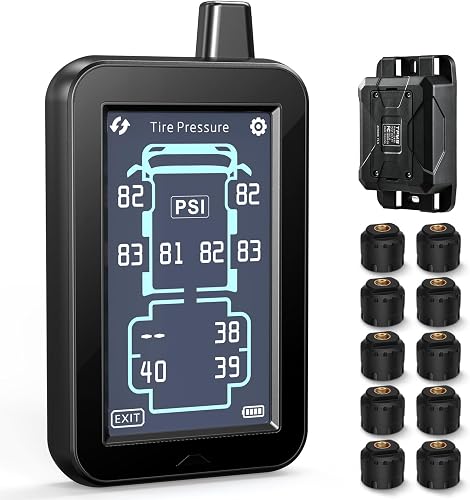 |
|---|---|---|---|---|---|---|---|---|---|---|
| Product | TireMinder i10 | Tymate TM12 | GT30 Trailer TPMS | Tymate TM2 | GT90 TPMS | Tymate TM7 | 2026 Solar TPMS | Tymate TM3 | TST 507 Series TPMS | GT80 RV TPMS |
| Brand | TireMinder | Tymate | GUTA | Tymate | GUTA | Tymate | XBNVGP | Tymate | TST TRUCK SYSTEM TECHNOLOGIES | GUTA |
| Best for | Best Overall | Best for Quick Maintenance | Best for Large Rigs | Best for Harsh Weather | Best for High Pressure | Best for DIY Upgrades | Best for Flexible Power | Best for Simple Setup | Best for Towing Vehicles | Best for Touchscreen Use |
| The listing says | 3.15" color LCD shows PSI and temperature Checks for leaks, pressure, and temperature issues | Flow-through sensors allow inflation without removal Supports up to 12 tires across four zones | Displays data for up to 10 tires Wireless sensors require no manual programming | Six alarm modes for leaks and pressure Sensors last up to two years | Tracks pressure and temperature 0-188 PSI Color LCD with 3-level brightness adjustment | Monitors pressure and temperature within ±1.5 PSI Plug-in power with dual USB charging | Real-time monitoring with 2 PSI precision 6 alarm modes with adjustable thresholds | Six alarm modes for leaks and pressure Solar, USB-C, and cigarette lighter charging | Alerts for pressure, temperature, and leaks 3.5-inch color display with rechargeable battery | 4.3-inch color touchscreen monitors 0-188 PSI Displays up to 22 tires with 6 alarms |
| More information | Check Price on Amazon | Check Price on Amazon | Check Price on Amazon | Check Price on Amazon | Check Price on Amazon | Check Price on Amazon | Check Price on Amazon | Check Price on Amazon | Check Price on Amazon | Check Price on Amazon |
1. TireMinder i10 RV TPMS with 4 Transmitters
Best for: Drivers wanting the most comprehensive real-time data.
The TireMinder i10 centers on a 3.15-inch color LCD. It displays PSI and temperature readings simultaneously so you never have to toggle between screens. The system scans for slow leaks, rapid leaks, blowouts, and pressure extremes every 6 seconds.
Because it supports up to 40 tires, this system fits almost any RV configuration. It handles a pressure range from 0 to 199 PSI with an accuracy of +/- 1 PSI. The included rhino signal booster is essential for long vehicles where distance might otherwise degrade data transmission.
If you notice intermittent signal loss, reposition the booster closer to the furthest transmitter.
Pros
- Monitors up to 40 tires.
- Checks tires every 6 seconds.
- Includes rhino signal booster.
Cons
- Display size is fixed.
2. Tymate TM12 RV Tire Pressure Monitoring System
Best for: Owners who prioritize fast, easy tire maintenance.
The Tymate TM12 features upgraded flow-through sensors that allow you to add air directly through the sensor. Because these sensors are pre-programmed, you simply match each one to the labeled wheel position for a true plug-and-play setup.
The system supports up to 12 tires and includes a split-screen display to help you monitor different zones of your rig at a glance. To ensure the sensors remain stable during travel, the manufacturer strongly recommends using metal valve stems. If you’re towing a large RV or anticipate signal blockage, add a repeater to maintain the system’s 50-foot range.
Pros
- Flow-through sensor design allows inflation without removal.
- Dual solar and USB-C charging options for endurance.
- Monitors up to 12 tires with a 0–144 PSI range.
Cons
- Requires metal valve stems for optimal stability.
- Solar charging performance depends entirely on available light conditions.
3. GT30 Trailer Tire Pressure Monitoring System
Best for: Long-distance travelers with very large vehicle combinations.
The GT30 Trailer TPMS is designed for heavy-duty use, handling pressures up to 188 PSI and temperatures up to 185 ℉. It allows you to monitor up to 46 tires without pressing a button, as the display automatically switches between the front and rear sections of your rig.
For reliable performance, always install these cap sensors on metal valve stems. Avoid rubber valve stems, as they may fail under the weight and vibration of a large rig. If you struggle with signal strength over long distances or through heavy interference, add a signal booster to maintain a stable connection.
The system configures your current pressure as the reference point upon pairing. You can then set alarms for a range of +25% to -15% of that baseline. If the monitor remains stationary for 15 minutes, it enters power-saving mode to preserve the internal lithium battery.
Pros
- Handles up to 188 PSI.
- Monitors up to 46 tires.
- Replaceable sensor batteries.
Cons
- Not for small vehicles.
- Requires metal valve stems for safety.
4. Tymate TM2 RV Tire Pressure Monitoring System
Best for: Reliability in challenging weather conditions.
The Tymate TM2 features IP67 waterproof sensors that remain durable even when you’re driving through rain or harsh environments. Its color LCD monitor uses automatic backlight adjustment, so you can clearly read your tire data whether it’s bright daylight or the middle of the night.
This system is pre-paired at the factory, which simplifies your initial setup process significantly. You should install these sensors on metal valve stems to ensure the best stability and safety. If you’re towing a trailer longer than 36 feet, you must purchase a separate repeater to ensure the signal stays strong between the back tires and the monitor.
The system monitors up to 10 tires and provides alerts for fast leaks, high or low pressure, and high temperatures. If your tire pressure deviates from your set reference point by more than 25% or less than 15%, the system triggers an alarm. Always check your tire pressure range, as this unit is designed for vehicles requiring 0 to 87 PSI.
Pros
- IP67 waterproof rated sensors.
- Automatic backlight adjustment.
- Pre-paired at the factory.
Cons
- Repeater sold separately.
5. GT90 Tire Pressure Monitoring System
Best for: Drivers needing a high-pressure monitoring solution.
The GT90 TPMS tracks pressure up to 188 PSI, making it a robust choice for heavy RVs, fifth wheels, and large trucks. Its color LCD display offers three levels of brightness, which helps you maintain visibility in various lighting conditions during your long-distance trips.
Because the system is expandable, it can grow with your needs, supporting up to 10 tires total. For vehicle combinations exceeding 40 feet, the manufacturer recommends adding their optional signal booster, as the standard range may not reach the furthest tires on very long trailers. If you experience signal interference from heavy metal obstructions, this repeater is essential for consistent data transmission.
After initial pairing, the system automatically sets your baseline pressure. It triggers alerts if your tires deviate by +25% or -15% from that saved value. For the most reliable performance, always install these cap sensors on metal valve stems rather than rubber ones.
Pros
- Wide 0-188 PSI range.
- 3-level brightness adjustment.
- Expandable to 10 tires.
Cons
- Repeater not included.
- Requires metal valve stems for best results.
6. Tymate TM7 RV Tire Pressure Monitoring System
Best for: DIY enthusiasts looking for a quick upgrade.
The Tymate TM7 is designed for a 5-minute setup, making it an excellent choice for those who want to upgrade their RV without professional help. It plugs directly into your cigarette lighter and includes two extra USB outlets so you can charge mobile devices while you drive.
This unit supports pressures up to 144 PSI and works for most SUVs, trucks, and travel trailers. The system automatically calibrates to your center tire pressure using the initial pairing process. If your total towing length is 36 feet or more, you must use a repeater to maintain a consistent signal. Without the repeater on these longer rigs, the system may fail to transmit data reliably.
For the best results, install the sensors on metal valve stems. This ensures stability and prevents damage to the valve during transit. If you need to replace the sensor batteries, use a CR1632 coin battery. The package includes four batteries, and you can find instructional videos on the product page to guide you through the process.
Pros
- Includes two USB charging ports.
- Quick 5-minute installation.
- Supports up to 144 PSI.
Cons
- Repeater needed for rigs 36 feet or longer.
- Metal valve stems recommended for stability.
7. 2026 Solar TPMS
Best for: Drivers who want flexible, continuous power options.
The 2026 Solar TPMS features dual charging, using solar panels for daily operation and USB-C for when you need a quick top-up. Its sensors refresh every 0.3 seconds, providing data updates three times faster than standard systems. This speed is vital for highway towing where tire conditions change rapidly.
The system is simple to install, requiring no tire removal. You must tighten the anti-vibration hex nuts counterclockwise to ensure a leak-free seal; skipping the soap water test during installation is a common mistake that risks silent air leaks. If you’re towing a trailer, verify your total length is under 50 feet, as the signal range is optimized for this distance.
The display automatically powers off three minutes after engine shutdown to preserve battery life. If your vehicle is parked in a garage or low-sunlight area, use the USB-C port to maintain the display’s charge.
Pros
- Fast 0.3-second refresh rate.
- Solar and USB-C charging.
- Tool-free 2-minute installation.
Cons
- Limited to 50-foot vehicles.
8. Tymate TM3 RV Tire Pressure Monitoring System
Best for: Drivers who want a simple, plug-and-play experience.
The Tymate TM3 is highly regarded for its ease of use. Because the sensors are factory-paired, you can start monitoring your tires immediately upon installation. It features an adaptive backlight, which is a great touch for drivers who frequently travel at night and need to check their tire status without distraction.
The system automatically sets your current pressure as the reference point. From there, it monitors a range of +25% to -15% PSI. If you notice the system struggling to maintain a connection, check your total vehicle length. If you’re towing a trailer over 36 feet, you must add a signal repeater to prevent signal loss.
For the most stable setup, always install these sensors on metal valve stems. While the sensors are IP67 waterproof and built for durability, using the wrong valve stem can compromise their performance.
Pros
- Pre-paired sensors save time.
- Adaptive backlight for night.
- Supports up to 10 tires.
- Flexible charging via solar or USB-C.
Cons
- Repeater sold separately.
- Requires metal valve stems for best results.
Like other systems in this series, it provides comprehensive coverage for a full fleet of wheels and provides alerts for leaks and pressure changes. It’s a robust choice for vehicles ranging from sedans to large RVs.
9. TST 507 Series TPMS
Best for: Owners who want a trusted, long-term system.
The TST 507 Series TPMS is a well-known option that includes a compact 3.5-inch color display and a long-term warranty. It’s designed to be expandable, allowing you to monitor both your tow vehicle and up to four towable trailers, which is perfect for complex RV setups.
If you’re towing a long trailer, the included repeater ensures the signal reaches the display without dropouts. You should place the repeater midway between the sensors and the monitor to maintain a steady connection.
While it’s a premium choice, the use of replaceable CR2032 batteries makes it easy to maintain over several years. If you see a low battery alert, simply unscrew the cap and swap the cell yourself. Don’t ignore these alerts, as the system relies on these sensors to trigger warnings for rapid leaks or high temperatures.
Pros
- Includes a multi-year warranty.
- Repeater included in kit.
- Supports multiple towed vehicles.
Cons
- Higher complexity for beginners.
- Requires manual battery maintenance.
10. GT80 RV Tire Pressure Monitoring System
Best for: Users who prefer a modern touchscreen interface.
The GT80 RV TPMS features a 4.3-inch full-color touchscreen, which makes adjusting settings and viewing data much more intuitive than button-based units. It handles pressures up to 188 PSI and can display data for up to 22 tires on a single page.
This system is ideal for commercial fleets or large RV owners who need to manage a high number of tires at once. It includes a signal booster for stable data transmission up to 164 feet. However, if you’re towing a trailer with a total length of 40 feet or more, you must use the included repeater to ensure signal integrity.
The system automatically sets your current pressure as the reference point upon installation. You can then customize alarm thresholds within a range of +25% to -15% of that baseline.
Pros
- Large 4.3-inch touchscreen.
- Monitors up to 22 tires.
- Includes signal booster.
Cons
- Larger display size.
How to Choose in Sixty Seconds
Which tire pressure difference actually matters?
The most important difference is the pressure range capacity of the sensors. You must choose a system that matches your RV tires’ maximum PSI. If your tires require 100 PSI but you choose a system capped at 88 PSI, the sensors won’t provide accurate alerts. Always check your tire sidewall for the maximum cold inflation pressure before you buy.
Never rely on a TPMS to replace manual pressure checks with a high-quality gauge. These sensors primarily alert you to sudden changes or deviations from your baseline pressure rather than replacing monthly maintenance.
What should I skip if I have a small trailer?
Skip the systems designed for 40+ tires or those that include high-power boosters if you only tow a small travel trailer. These advanced units often have larger, more complex displays that take up extra space on your dashboard. Focus instead on compact kits, like the Tymate TM7, which are easier to install and include features like USB charging ports that are more practical for smaller vehicle interiors.
A system that supports 4 to 6 sensors is usually enough for a standard SUV and travel trailer combo. Over-buying for features you’ll never use often makes the setup process more confusing than it needs to be.
What should I confirm before ordering?
Confirm your valve stem material. Almost all manufacturers recommend using metal valve stems with external cap sensors. External sensors are heavier than standard valve caps, and the constant vibration of an RV on the road can cause rubber valve stems to flex or crack, leading to air leaks. If your RV currently has rubber stems, you should have a professional replace them with metal ones.
Additionally, measure your total rig length. If your trailer is over 36 feet, you almost certainly need a signal repeater to prevent the monitor from losing contact with your rear sensors. Without a repeater on a long rig, you risk intermittent signal loss, which triggers unnecessary “sensor lost” alarms while you’re driving.
The TireMinder i10 remains our top recommendation for most RV owners because it offers the best balance of clear, real-time data and reliable signal strength. If you need something that’s easier to maintain without constant sensor removal, the Tymate TM12 is an excellent alternative due to its flow-through design. Before you finalize your order, double-check your valve stems and total vehicle length to ensure you have all the necessary parts for a successful installation.
Related guides
Frequently Asked Questions
Does the system work with rubber valve stems?
Most manufacturers warn against using external sensors on rubber valve stems because the weight can cause the stem to flex and fail. You should have a tire shop install metal valve stems before attaching your monitoring sensors. This is a standard safety practice for any RV or trailer TPMS installation.
What happens if I lose signal while driving?
If your monitor loses signal, it will trigger a visual or audible alert to notify you that it is no longer receiving data. Systems like the GT30 Trailer TPMS notify you immediately so you can investigate. If you frequently lose signal, install a signal repeater to bridge the range gap.
Is the simplest system on the list enough?
A simpler system like the Tymate TM3 is often more than enough for most standard travel trailers or smaller RVs. These systems still provide critical alerts for rapid leaks, high temperatures, and pressure changes, which are the most common causes of tire failure on the road. You don’t need to pay for a system that monitors 40 tires if you only have four or six to watch.
What kind of maintenance does the monitor require?
Most monitors require minimal maintenance, though you should keep the screen clean and ensure solar panels remain free of debris. Charge internal batteries via USB-C before your first trip of the season. Sensor batteries typically require replacement every six months to two years, so keep spare CR1632 or CR2032 batteries on hand.
Conclusion
Once you’ve picked the right setup, take a moment to test the sensors in your driveway before your next big trip. You’ll feel much more relaxed on the road when you don’t have to worry about your tires. It’s a simple upgrade that’ll keep your family safe for years to come.