Choosing the right vent insulator depends on whether you prioritize thermal efficiency, light control, or ease of storage. While all these options fit standard vents to reduce heat transfer, they differ significantly in their materials, attachment methods, and overall thickness. These differences determine how well each pad seals against drafts and how much space it occupies when not in use.
Best overall: Camco 14-Inch Vent Insulator, which uses a three-layer construction including a reflective surface and thick foam to provide reliable year-round temperature regulation for standard 14-inch openings.
Best for skylights: Camco 14×22 Vent Insulator, a specialized option that provides a dedicated fit for larger roof openings and includes adjustable straps to ensure a secure hold.
Best for storage: Multi-Use Inflatable Skylight Cover, which offers a unique advantage by deflating for compact packing, making it ideal for campers with limited storage space.
This guide is for RV owners looking to improve interior comfort and energy efficiency by addressing heat loss or gain through roof vents.
How We Picked
Products that lacked clear dimensions or had ambiguous installation instructions were removed from consideration. We focused on how these covers balance thermal protection with the practical realities of RV life, such as storage limitations and the need for a secure, draft-free fit.
All 10 products side by side — scroll sideways to see every column.
| Top Pick | Best for Large Skylights | Best for Fan Flanges | Best for Compact Storage | Best for Noise Reduction | Best for Skylights | Best for Sleeping | ||||
| Preview |  |  | 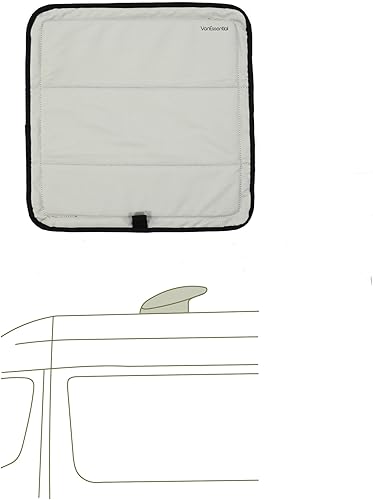 |  |  |  |  |  |  |  |
|---|---|---|---|---|---|---|---|---|---|---|
| Product | Camco 14-Inch Vent Insulator | Camco 14×22 Vent Insulator | VanEssential Magnetic Vent Cover | Universal Reflective Vent Insulator | RVINGPRO Non-Slip Vent Insulator | NLQR Memory Foam Insulator | Multi-Use Inflatable Skylight Cover | RecPro Foam Vent Insulator | Roof Vent Blackout Shade | Waterproof Roof Vent Insulator |
| Brand | Camco | Camco | VanEssential | runfider | EyGde | NLQR | 2012 | RecPro | WanDwel | Safoner |
| Best for | Best Overall | Best for Large Skylights | Best for Fan Flanges | Best for Compact Storage | — | Best for Noise Reduction | — | Best for Skylights | Best for Sleeping | — |
| The listing says | Blocks sun rays for temperature control Reduces heat transfer and improves A/C efficiency | Deflects sun rays from skylights Reduces heat transfer and improves A/C efficiency | Fits 16.5 inch x 16.5 inch fan flanges Reflects 95% of radiant heat | Reflective surface for 14 x 14 inches vents Memory foam with removable zipper cover | Blocks heat and cold for energy savings Measures 14"x14"x3" for standard vents | 3-inch thick high-density memory foam Fits standard 14"x14" RV vents | Blocks heat, cold, and sunlight Fits 14" × 14" vents with inflatable design | RV vent insulator and skylight cover Dimensions: 14" x 14" x 3 1/2" | Blocks light for sleeping Measures 16×16 inches | Blocks sunlight and UV rays Maintains interior temperature |
| More information | Buy on Amazon | Buy on Amazon | Buy on Amazon | Buy on Amazon | Buy on Amazon | Buy on Amazon | Buy on Amazon | Buy on Amazon | Buy on Amazon | Buy on Amazon |
1. Camco 14 Inch RV Vent Insulator Cover
Best for: Standard 14-inch RV roof vent owners.
The Camco 14-Inch Vent Insulator is a widely recognized choice for standard RV vents. Its three-layer design combines a reflective outer surface with a synthetic fleece layer and a full 2 ¾ inches of foam. This construction is designed to block sun rays and reduce heat transfer, which helps keep your living space cooler in the summer and warmer during winter months.
Use this to increase A/C efficiency by reducing heat transfer. The thick foam core creates a snug fit that effectively blocks unwanted drafts.
Check your vent dimensions before purchasing to ensure compatibility with standard roof openings. This insulator is strictly designed for standard roof vent openings. If your vent is a non-standard size, this product won’t provide the necessary seal to stop heat transfer.
Many owners make the mistake of assuming it fits all skylights, but it’s specifically engineered for standard RV vent frames.
Pros
- Three-layer protective construction
- Thick 2 ¾-inch foam core
- Fits standard roof vents.
Cons
- Only fits standard roof openings.
2. Camco RV Vent Insulator Cover
Best for: Larger RV skylights.
This insulator is built specifically for larger skylight openings that standard vent pads can’t cover. It measures 14 inches by 22 inches and features a depth of 4 ½ inches at its thickest point. The kit includes adjustable straps and hardware, ensuring the cover stays in place once installed over the skylight opening.
Before purchasing, verify your skylight depth. If your opening is less than 4 inches deep, this unit won’t seat properly, leading to gaps that allow heat transfer and negate the thermal benefits. You must have at least 4 inches of clearance to ensure the foam seals the perimeter effectively.
The triple-layer, dome-shaped design helps deflect solar heat, which is particularly useful for large skylights that often let in too much light and warmth. By blocking these damaging rays, the insulator helps keep your RV cooler in the summer and warmer in the winter. This simple adjustment reduces the load on your air conditioning unit, directly increasing its efficiency.
It’s a straightforward solution for those needing to cover a larger surface area. If you struggle with excessive heat gain through your ceiling, prioritize this model for its specific dimensions. It remains the most reliable way to mitigate temperature fluctuations in larger RV skylight configurations.
Pros
- Designed for 14×22 inch skylights
- Includes adjustable straps and hardware
- Thick dome-shaped insulation
Cons
- Requires 4-inch minimum depth
3. VanEssential Magnetic Insulated Roof Vent Sun Cover
Best for: MaxxAir or Fantastic Fan owners.
The VanEssential Magnetic Vent Cover uses a different approach by relying on a magnetic attachment to seal against 16.5-inch by 16.5-inch fan flanges. It’s made with 5.0mm double-foiled aluminum XPE insulation, which is rated to reflect up to 95% of radiant heat. The exterior is crafted from durable, UV-resistant ripstop polyester fabric.
This cover is an excellent choice for those who want a secure, tool-free installation that won’t shift during travel. Before purchasing, check your fan mounting depth. If your opening knob hangs lower than the roof line, the cover won’t work. It requires the full surface area to seal and attach properly. If you see a protrusion blocking that flat perimeter, choose a different solution.
The included storage sack makes it easy to stow the cover when you want to let light or air into the van. You gain significant thermal protection without the hassle of permanent hardware.
Pros
- Convenient magnetic attachment
- Reflects up to 95% radiant heat
- Includes handy storage sack
Cons
- Won’t fit shallow-mounted fans where the knob hangs below the roof line
4. 2PCS 14″x14″x3″ Universal RV Vent Insulator
Best for: High-density foam seekers.
The Universal Reflective Vent Insulator from runfider features a multi-layered, high-density memory foam core. Its surface has a reflective coating intended to refract sun rays, keeping the interior cool in the summer. To maximize thermal efficiency, always place the reflective side facing outward toward the sun.
Because it uses high-density, high-fluffiness memory foam, it resists deformation and maintains a snug fit within standard square openings. If you notice the foam losing its shape, remove it from the vent and allow it to expand in an open space to recover its original volume. The included zipper allows you to remove the fabric cover for machine or hand washing.
This is a plug-in style cover, not a permanent, bolt-on fixture. If you need to store it, simply compress the foam to fit into narrow spaces. It’s ideal for those who prioritize portability and seasonal adjustment over fixed hardware.
Pros
- Zippered cover for easy cleaning
- 3-inch high-density foam core
- Reflective surface coating
Cons
- Plug-in style only
5. 2 Pack RV Vent Insulator 14″x14″x3″
Best for: Secure, non-slip placement.
The RVINGPRO Non-Slip Vent Insulator distinguishes itself with silicone particles on all sides. These help the thick sponge core stay firmly in place once pushed into the vent opening. It features a reflective aluminum foil layer that blocks up to 99% of radiant heat.
This model is a practical addition for those who find that standard foam pillows tend to shift or fall out during transit. It fits standard square roof openings. If your vent opening is non-standard or custom-shaped, this unit won’t provide the necessary seal. Always measure your skylight frame before purchase to ensure the foam thickness doesn’t obstruct any internal hardware or crank mechanisms.
Many users fail to account for the bulk of the sponge when the vent is closed. If your crank handle sits flush against the screen, this insulator may be too bulky for your specific setup. Use this model only if you have sufficient clearance between the vent screen and the roof structure.
Pros
- Silicone particles prevent slipping
- 3-inch thick sponge core
- Reflective aluminum foil layer
Cons
- Fits standard roof openings only.
- Requires 3 inches of clearance
6. NLQR RV Vent Insulator 14″x14″x3″
Best for: Noise reduction and blackout.
The NLQR Memory Foam Insulator uses a substantial high-density core to block 100% of light and dampen ambient sounds like wind or rain. Unlike standard sponges, this foam conforms to the frame to eliminate light gaps and airflow. If you prioritize sleep quality in bright or noisy campgrounds, this density is your primary advantage.
The unit relies on a pressure-based fit rather than adhesives. Simply compress the foam and push it into any standard 14″x14″ vent. Because it relies on expansion, it stays secure during travel vibrations or altitude shifts.
Maintenance is simplified by a removable, machine-washable zipper cover. This prevents the buildup of dust or odors common in fixed-fabric models. Don’t treat this as a lightweight accessory. The high-density material is heavier than basic foam alternatives, so account for the extra weight if you’re strictly monitoring your RV’s payload capacity.
Pros
- Blocks 97% of radiant heat
- Machine-washable cover
- No tools required for installation
Cons
- Heavier than standard foam alternatives
7. Multi-Use Inflatable Skylight Cover
Best for: Compact storage.
The Multi-Use Inflatable Skylight Cover offers a unique alternative to bulky foam pads. Because it’s inflatable, it provides a snug, custom-like fit when in use but can be deflated to a very small size for storage. This makes it a great choice for those who have very little closet or cabinet space in their RV.
While it’s designed for standard square vents, it also serves secondary purposes as a seat cushion or back support. If you have limited storage, the ability to deflate the unit is a major advantage over rigid foam blocks that occupy permanent space.
It isn’t for users who want a “set it and forget it” solution, as it requires inflation and deflation to be used effectively. If you’re parked for a long season, the manual effort of inflating the cover may become a chore. However, for those who move frequently, the compact, portable design allows for quick setup.
Pros
- Deflates for compact storage
- Versatile multi-use design
- Lightweight and portable
Cons
- Requires manual inflation
- Not a permanent installation
8. RecPro RV Foam Vent Insulator & Skylight Cover
The RecPro Foam Vent Insulator is a straightforward 3 ½-inch thick foam pad designed for standard 14-inch by 14-inch roof vents. It comes with a removable cover and a carrying handle, which makes it easy to take in and out of the ceiling opening.
If you struggle with extreme temperature swings, choose the version with the optional reflective layer. This added component blocks solar heat gain during peak summer months, keeping your interior significantly cooler. Without this layer, the standard foam acts only as a thermal barrier against ambient air.
The most common mistake is assuming this block provides a permanent, airtight seal. It’s a friction-fit solution meant for temporary use while parked. If you need a permanent blackout or a magnetic seal that stays in place while driving, this traditional foam design won’t meet your needs.
Use this product if you want a simple, portable way to regulate cabin temperature during seasonal stops. If you require a solution that stays secure during transit or blocks all light, look for alternatives with mechanical fasteners. The removable cover allows for easy cleaning, ensuring the unit remains hygienic after long-term storage in your RV ceiling.
9. RV Roof Vent Blackout Shade 16×16 Skylight Cover Blocks Light/
Best for: Complete light blocking.
The Roof Vent Blackout Shade is tailored for 16-inch by 16-inch skylights. It uses a three-layer construction: a reflective outer layer, a middle felt insulation layer, and a waterproof inner fabric. The setup uses pre-sewn hook and loop fasteners, which allows for installation without any drilling or tools.
Before you buy, measure your opening carefully. If your vent measures 14 inches, this product won’t fit. Using it on an undersized opening leaves gaps that let in heat and light, defeating the purpose of the reflective layer. Always confirm your dimensions to ensure the hook and loop fasteners align correctly with your frame.
This shade is specifically focused on blocking out light and heat for better sleep. The reflective exterior serves a dual purpose: it keeps your cabin cool during summer afternoons and reduces energy consumption by lowering the load on your cooling systems.
Pros
- Total blackout for sleeping
- Tool-free hook-and-loop setup
- Waterproof inner fabric
Cons
- Specific to 16-inch openings only
10. Waterproof Roof Vent Insulator
Best for: Moisture-prone areas.
The Safoner Waterproof RV Roof Vent Insulator fits 16-by-24-inch skylights, but the included Velcro strips allow it to secure firmly to 14-by-22-inch vents. Its triple-layer construction uses a reflective silver outer layer to deflect UV rays, a middle insulation core to stop heat transfer, and an off-white inner layer for privacy.
This cover excels in shower skylights where moisture resistance is essential. If you live in a climate with extreme temperature swings, the insulation layer helps keep your interior cool during summer and warm throughout the winter.
Avoid this if you prefer a “plug-in” foam block that stays in place via friction alone. Because this model relies on adhesive Velcro, you must clean the mounting surface with rubbing alcohol before installation to ensure the strips don’t peel away in humid conditions. If the adhesive fails, the cover will lose its thermal seal.
Pros
- Waterproof design for showers
- Triple-layer insulation
- Secure Velcro mounting
Cons
- Requires adhesive mounting strips
- Needs clean surfaces for proper adhesion
How to Choose the Best RV Vent Insulator Pad
Which size should I prioritize?
Always prioritize the physical opening of your vent over any other feature. Most standard RV roof vents are 14 inches by 14 inches, but skylights often vary in size. Before ordering, measure the width and length of your vent opening from the inside.
If your vent has a non-standard shape or size, a universal foam block might not provide a proper seal, leading to drafts. Always check the manufacturer’s specific dimensions for the product, as a gap of even half an inch can reduce the effectiveness of the insulation.
Confirm the depth of your vent as well. Some covers require a minimum depth, such as 4 inches, to fit securely. If your fan is shallow-mounted, where the opening knob hangs lower than the roof line, a standard foam block won’t work because it requires a full, unobstructed surface to seal against the opening.
Does the reflective layer really matter?
A reflective layer is essential if your RV is frequently parked in direct sunlight. Reflective materials help minimize radiant heat gain, which is the primary way heat enters through a roof vent or skylight during the summer. By reflecting these rays back outward, the insulator keeps the interior temperature lower and reduces the workload on your air conditioning unit.
If you primarily camp in shaded areas or only use your RV during cooler months, the reflective layer is less critical, but it still provides a useful barrier against heat loss during the winter. Look for products with double-foiled aluminum or reflective coatings, which can reflect up to 95% to 99% of radiant heat.
What is the advantage of a removable cover?
A removable cover makes maintenance much easier, especially in high-humidity areas like bathrooms or kitchens where vent covers can collect dust, condensation, or grime. Products with zippered or Velcro-attached fabric covers allow you to wash the outer layer separately, which helps prevent odors and keeps the RV interior looking clean.
If you choose a solid foam block without a removable cover, you’re limited to surface wiping, which may not be enough for deep cleaning. For long-term use, a machine-washable design is the most practical choice, ensuring that your insulation remains fresh and effective throughout your travels. When selecting, prioritize high-density memory foam or 3-inch thick sponge cores, as these provide a superior, gap-free seal compared to low-density alternatives.
Frequently Asked Questions
What does it take to maintain these insulators?
Most vent insulators are low-maintenance, but cleaning depends on the material. Foam blocks with removable covers can be unzipped and washed, while solid foam blocks should be wiped down with a damp cloth. Regularly check that reflective surfaces remain intact to ensure they continue to block heat effectively.
Will these insulators fall out while driving?
Most modern vent insulators stay in place using a friction fit. High-density foam models are engineered to expand against the vent opening, creating a pressure-based fit that resists vibrations during travel. If you are concerned about stability, look for models with non-slip surfaces that grab the vent frame.
Is the simplest foam block enough for me?
A high-quality foam block is sufficient for most RV owners to regulate temperature and block light. The Camco 14-Inch Vent Insulator provides a simple, effective solution for standard vents. You only need complex options like magnetic covers or blackout shades if you have specific needs, such as a specialized fan flange.
What should I look for if my vent has a fan?
You must ensure your insulator does not interfere with the fan’s operation or physical components. Always verify that the cover is compatible with your specific fan flange before installation. Never force an insulator into an opening where it might press against the fan blades or the internal motor.
Conclusion
Once you’ve picked the perfect fit, take a few minutes to test the seal during a breezy evening. You’ll quickly notice how much quieter and more comfortable your cabin feels. Don’t hesitate to swap it out if your travel needs change, as you’ll definitely appreciate the extra control over your interior climate.